Is Training to Failure a Good Idea? What the Research Says
The internet is full of coaches and gym bros who will tell you that training to failure is the secret to muscle growth. Leave nothing in the tank. Every set to the absolute limit. Anything less is weak.
The research disagrees — and so does anyone who has to show up and be functional the next day.
Here is what the evidence actually says, what it means for military professionals and tactical athletes, and the one situation where pushing to failure does make sense.
What the Research Found
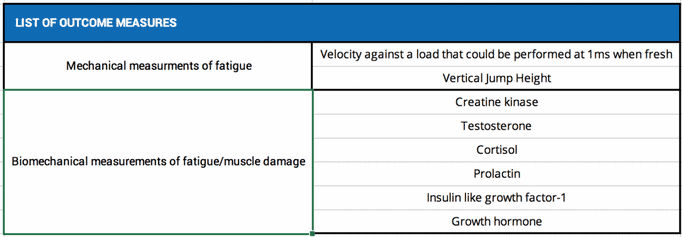
A study that crossed my radar looked at 10 different training conditions to measure how training to failure affected the magnitude and duration of fatigue and recovery. The researchers measured fatigue two ways — practically (bar velocity and vertical jump height) and biochemically (creatine kinase, an enzyme used to assess muscle damage).
The results were pretty clear:
Training protocols that went to failure — especially with higher rep ranges — caused significantly larger and longer-lasting declines in both bar speed and vertical jump height. Creatine kinase levels were also substantially elevated in the high-rep failure groups, indicating greater muscle damage that takes more time to resolve.
Translation: training to failure makes you more tired, keeps you more tired longer, and doesn’t produce meaningfully better strength or hypertrophy outcomes than stopping a rep or two short.
Why This Matters More for Military and Tactical Athletes
For most people, being wrecked for two days after a training session is inconvenient. For military professionals, law enforcement, and first responders, it’s a liability.
You don’t get to pick when the hard day happens. You can’t call in sore. If your training regularly leaves you so beaten up that your performance on the job is compromised, you’ve crossed a line that no amount of #gainz is worth.
This is where smart programming pays off. The goal isn’t to find your absolute limit every session — it’s to train hard enough to keep improving without digging a recovery hole you can’t climb out of before the next session. For more on how fatigue accumulates and why recovery is where adaptation actually happens, the stress management and performance piece is worth a read.
On the conditioning side, the same logic applies. When interval pace drops off a cliff, more reps just create damage without productive stimulus. Stop there, recover, and repeat — don’t grind through degraded effort and call it toughness.
Reps in Reserve: The Practical Application
Leaving one or two reps in the tank at the end of a set — what coaches call “reps in reserve” (RIR) — produces essentially the same strength and hypertrophy results as going to failure, with significantly better recovery between sessions.
Think about what that actually means: you can get the same training outcome, recover faster, train more frequently, and stay healthier over the long haul — just by stopping before you absolutely have to.
That is not being soft. That is being smart. Check the ego, leave something in the tank, and come back tomorrow able to train again.
When Training to Failure Actually Makes Sense
All that said — there is a time and place for it.
If you’ve never really pushed yourself hard, going to failure a few times teaches you where your actual limit is. Most people who think they’re training hard aren’t. Failure gives you a real reference point.
If you’re building mental toughness, occasionally going all out in the gym and leaving nothing left has value beyond the physical. Learning to push through discomfort under controlled conditions is a skill that transfers. For a structured approach to building that mental edge, the 6 exercises for mental toughness post covers exactly that.
The key word is occasionally. Failure as a tool, used deliberately, a few times a month — not as your default mode every session.
The Practical Takeaways
- Training to failure causes more fatigue and longer recovery, especially with higher rep ranges. This is not a worthy trade-off for most people most of the time.
- Excessive fatigue reduces the quality of your next training session — which means over time, going to failure can actually lower your total training output.
- Stopping one or two reps short produces similar strength and hypertrophy results with substantially better recovery. Stop leaving gains on the table by destroying yourself unnecessarily.
- You can always do more tomorrow. You cannot undo the excessive damage you did yesterday.
When you’re training for life and longevity, quality will always beat quantity.
If you want to see how these principles apply to a complete training structure — frequency, volume, load, and recovery all dialed in — how to get strong lays out the full framework.