The Pareto Principle and Training: How the 80/20 Rule Makes You Fitter
The Pareto Principle — the 80/20 rule — states that roughly 80% of your results come from 20% of your efforts.
In business, 80% of revenue comes from 20% of customers. In software, 80% of crashes come from 20% of bugs. In training, 80% of your fitness results come from 20% of the work you are actually doing.
Most people are spending the majority of their training time in the unproductive 80% — and wondering why they are not getting faster, stronger, or leaner despite working hard.
The Law of Diminishing Returns in Training
Here is the concept that underpins everything else in this post.
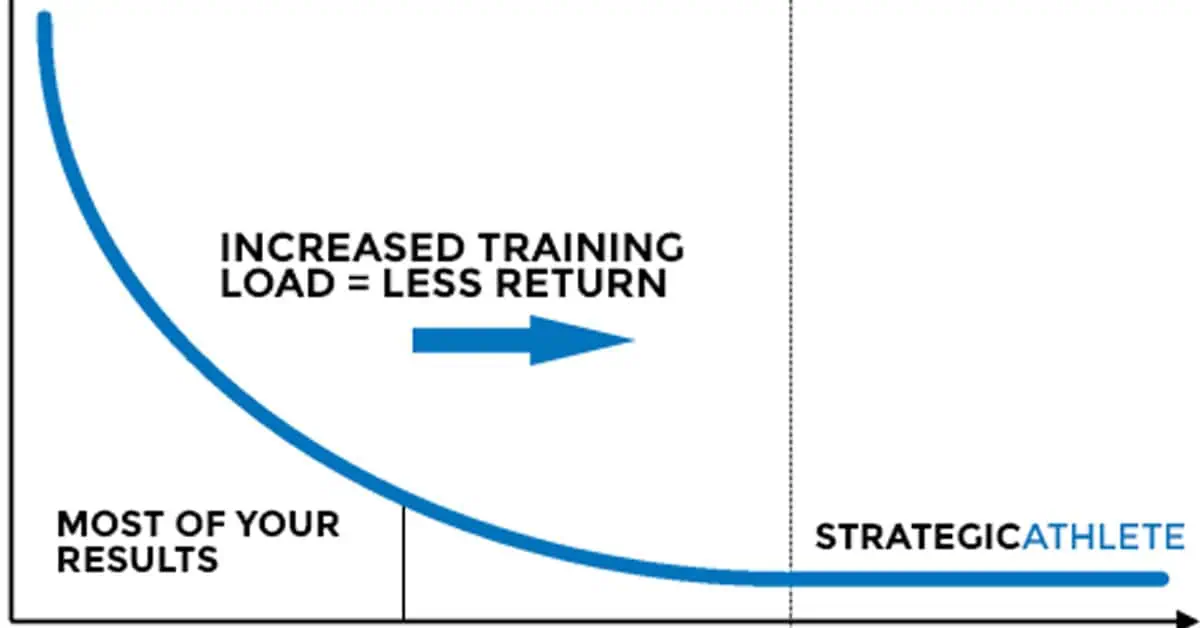
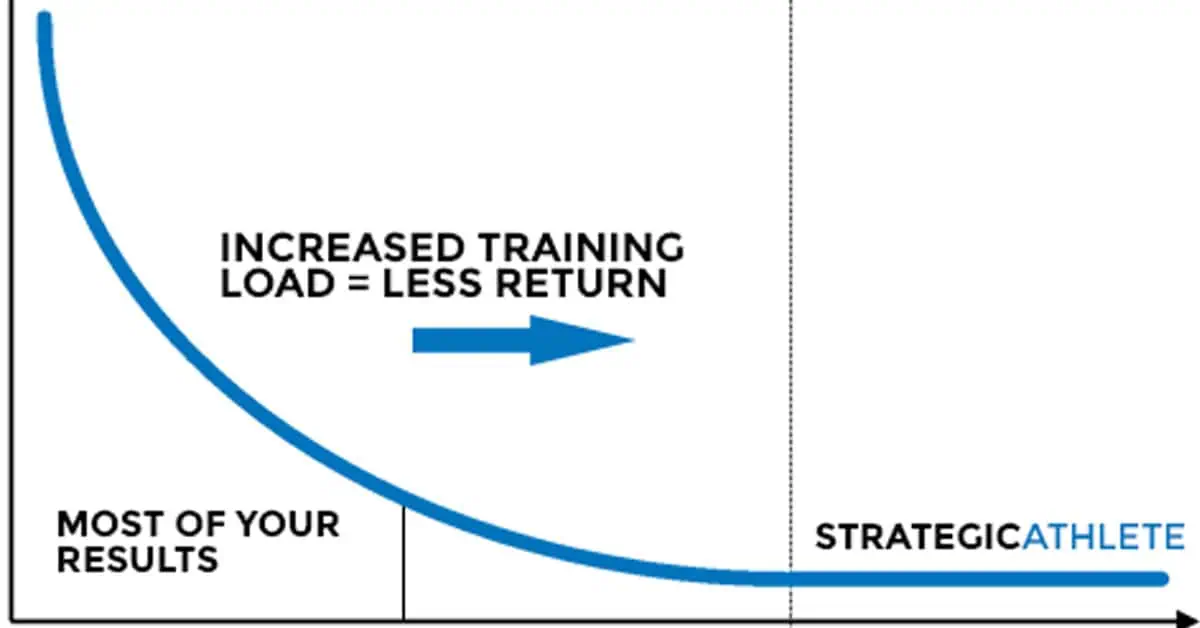
That curve tells an important story. Yes, you can always run more miles, add more training days, or increase your volume — and yes, your aerobic system will continue to adapt. But each additional unit of training produces less adaptation than the one before it.
For a beginner this almost does not matter. Add almost any training stress and you will improve. But for anyone who has been training consistently for more than a year, you are past the steep part of that curve. You are in the zone where adding volume produces marginal gains — and the cost of that extra volume in recovery, time, and injury risk starts to outweigh the benefit.
This is exactly why long slow distance running produces diminishing returns past a certain point. You can log 50-mile weeks and still be slower than someone running 20 miles of well-designed intervals. The volume is not the problem or the solution. The quality and composition of the training is.
The Overtraining Zone
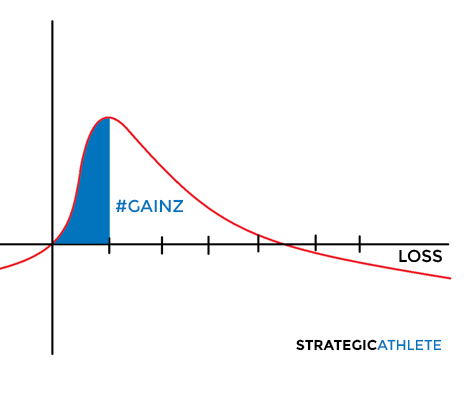
The second curve matters just as much as the first.
Every training session withdraws from your recovery bank. Done correctly, the withdrawal is smaller than the deposit your body makes during recovery — and you get stronger, faster, more capable over time. Push past the optimal zone and the withdrawals exceed the deposits. You are not just failing to improve; you are actively getting worse.
This is the overreaching and overtraining zone. It is not dramatic or sudden for most people — it creeps in gradually as fatigue accumulates, sleep quality drops, motivation fades, and performance mysteriously stalls or declines despite consistent training.
The warning sign most people miss: if you are training hard and consistently and not improving, the solution is almost never more training. It is almost always better recovery, better sleep, better programming — or simply less volume applied more intelligently.
What the High-Value 20% Actually Looks Like
For training, the movements and methods that produce the vast majority of results are not secrets:
Strength: Heavy compound barbell work — squat, deadlift, press, clean. These movements train the largest muscle groups, demand the highest neurological output, and transfer directly to real-world physical performance. Everything else is supplemental. As covered in how to get strong, the fundamentals done consistently beat sophisticated programming done sporadically every time.
Conditioning: High-intensity intervals. Short, hard efforts with full or near-full recovery. Two to three sessions per week of well-designed interval work will improve your aerobic capacity and power more than four or five easy runs. The research backs this up — the endurance mini-course covers the mechanism in detail if you want to go deeper.
Everything else: Mobility, accessory work, skills practice. These matter, but they are the supporting cast. If you are pressed for time or energy, the compound lifts and the intervals are the 20% that produce the 80%. Everything else fills in around them.
The Diet Version
The same principle applies to nutrition — and the common mistake is the same: optimizing the wrong things while ignoring the high-leverage basics.
The fundamental equation is simple: consume less energy than you expend and you lose weight. Consume more and you gain. But “simple” does not mean easy to apply, because both sides of the equation are moving targets.
Calories in is harder to track accurately than most people realize. Nutrition labels are estimates. Absorption varies between individuals and food types. The number you enter into a tracking app and the number your body actually absorbs are not the same.
Calories out has more components than most people account for:
- Resting metabolic rate (RMR) — what your body burns just keeping you alive
- Thermic effect of eating (TEE) — calories burned digesting food
- Physical activity (PA) — training and intentional exercise
- Non-exercise activity thermogenesis (NEAT) — everything else you do that burns calories
The important thing to understand about this equation: when you significantly reduce calories, your body reduces energy expenditure in response. RMR drops as you lose mass. NEAT decreases. TEE falls. Your body gets more efficient at absorbing what you do eat. This is not failure — it is your body doing exactly what it evolved to do. The practical implication is that the longer you diet, the harder continued fat loss becomes. Varying your intake — strategic increases in calories around your harder training days — can help keep the system from adapting too aggressively.
None of this requires advanced sports nutrition knowledge to act on. Track your food for two weeks, watch the scale, adjust one variable at a time. That straightforward approach is the high-value 20% of nutrition. Everything else is optimization on top of a working foundation.
The Practical Takeaway
More is not better. Better is better.
Identify the 20% of your training that produces the most adaptation — compound strength work and high-intensity intervals — and do those things consistently and well. Add volume only when you can recover from it and only if the fundamentals are already solid.
Keep it varied enough to prevent accommodation — your body adapts to a constant stimulus and stops responding — but varied around a clear goal, not randomly. As the keeping it simple post covers, the temptation to constantly add complexity is one of the most reliable ways to dilute the effectiveness of the work that actually matters.
Let the Programming Handle the Math
Understanding the Pareto Principle is useful. Having a program that already applies it — so you are not guessing which 20% to focus on — is better.
The Strategic Foundations Training Team is built on exactly this framework: the high-value movements, intelligently varied, with enough structure to keep you progressing without needing to figure out the programming yourself. Fourteen days free to see if it fits.
The 20% that matters is simpler than most people want it to be. Do it consistently and the results follow.