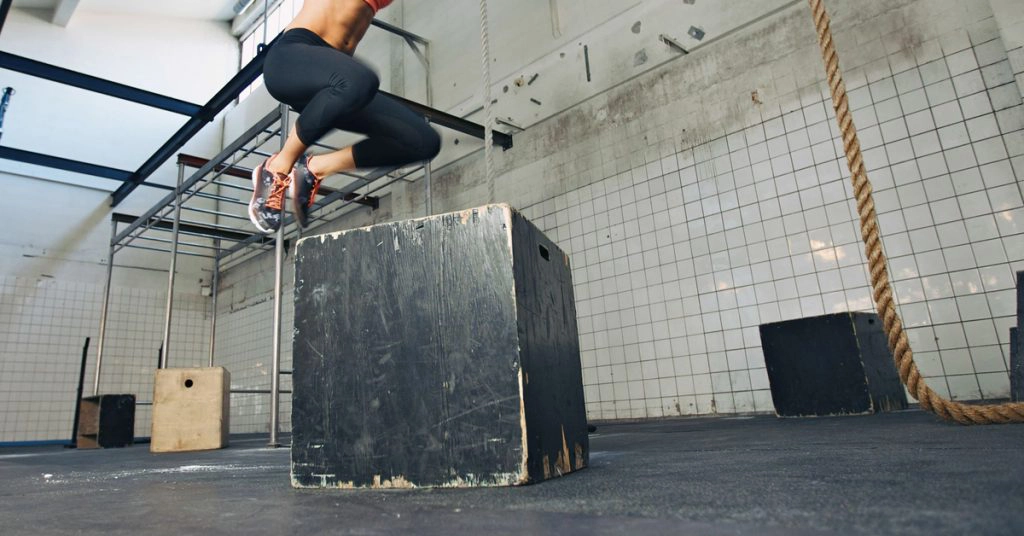
Power and Plyometrics: How to Build Explosive Strength for Military Athletes
Plyometric training — jumps that involve rapid, forceful shortening and lengthening of major muscle groups — is one of the most effective tools available for building both explosive strength and maximal strength simultaneously.
The research is not subtle about this. In a study by Verkhoshansky, volleyball players performed depth jumps three times per week for four weeks. The result: explosive strength improved by 26% and maximal strength improved by 14%.
That is not a minor performance enhancement. And it requires no barbell, no gym, and minimal equipment.
Here is what plyometrics actually are, why they work, and how to add them to your training correctly.
What Plyometrics Actually Are
The history starts in the 1950s with Soviet coach-turned-researcher Yuri Verkhoshansky, who developed what he called the “Shock Method” — training that used the sharp muscular tension created by the body’s impact with the ground to develop explosive force. What became known as plyometrics is built on a specific physical mechanism: the stretch-shortening cycle.
When your muscle is rapidly stretched (the landing phase of a jump), it stores elastic energy. When it immediately contracts (the push-off phase), that stored energy is released — producing more force than the concentric contraction alone could generate. This is why efficient plyometric movement feels surprisingly effortless compared to slow, grinding strength work.
To feel the difference right now: stand up and start bouncing lightly in place, as if you were jumping rope. Notice how the ground seems to push you back up — that is elastic energy being conserved and redirected. Now rock back onto your heels and continue bouncing. The impact is harsher, the energy is absorbed rather than redirected, and each bounce requires significantly more effort. That is the difference between an elastic collision and an inelastic one — and it is why heel striking while running is so inefficient.
Why It Works: Two Mechanisms
Miogenic (muscular/tendon): Plyometric training conditions your muscles and tendons to absorb and redirect force more efficiently. The connective tissue strengthens and becomes better at managing the stretch-shortening cycle — which also provides meaningful protection against injury as the tissues adapt to the impact forces involved.
Neurogenic (nervous system): Research shows plyometric training can improve EMG parameters (measures of muscle activation) by up to 20%. This means more motor units recruited, higher firing rates, and better motor unit synchronization. More motor units recruited faster equals stronger, more powerful contractions. This is the same neurological adaptation that dynamic effort lifting targets — just accessed through a different movement pattern.
The Three Types of Plyometric Jumps
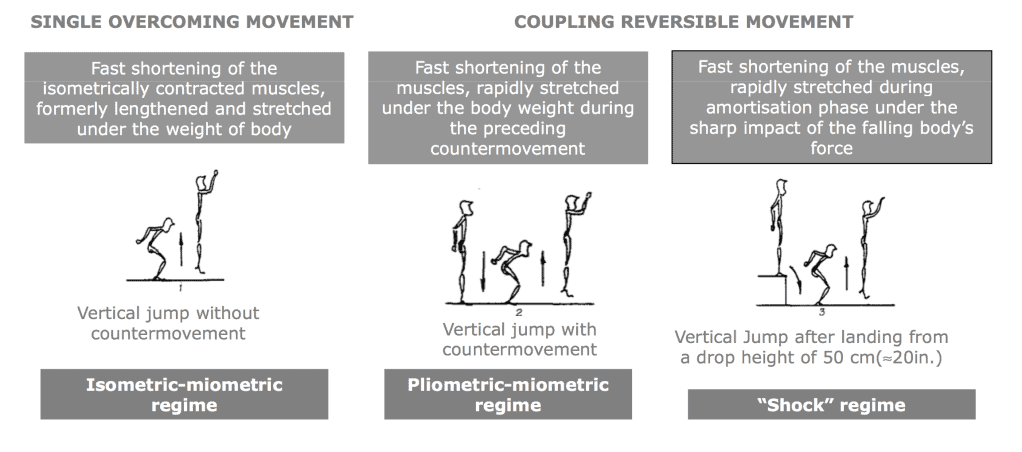
Concentric-only jumps (squatting down, pausing, then jumping) produce the least power because there is no pre-stretch of the muscle. The elastic energy potential is wasted in the pause.
Countermovement jumps (box jumps, vertical jumps with a quick dip) are the most common plyometric movement and are effective. The rapid lowering pre-stretches the muscle immediately before the jump, storing and releasing elastic energy.
Drop jumps (stepping off a box and immediately jumping) produce the most force and power of the three. You are landing and immediately redirecting the force of the fall — maximizing the stretch-shortening cycle.
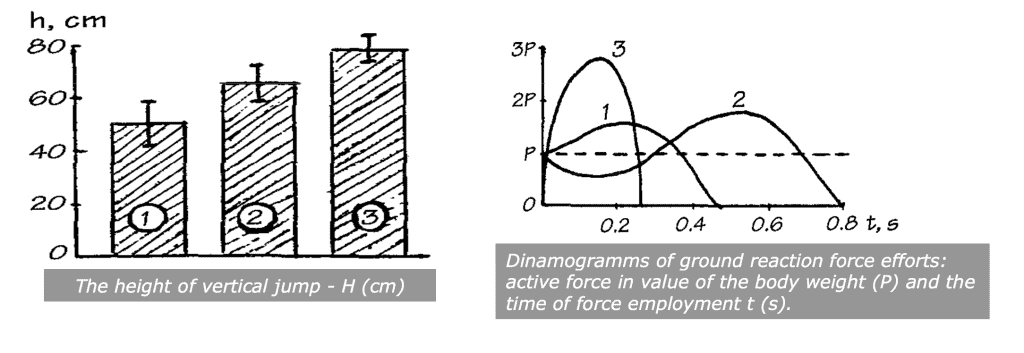
For power development, drop jumps from approximately 30 inches (75cm) are the most effective. For maximal strength development, a higher drop height around 42 inches (110cm) is more appropriate — though this requires a well-conditioned base before attempting.
How to Add Plyometrics to Your Training
Prerequisites: plyometrics require the ability to land correctly — soft knees, hips back, absorbing force through the whole foot rather than crashing down on your heels. If your landing mechanics are poor, start with box jumps at low height and focus entirely on landing quality before adding depth or intensity. Loading a dysfunctional landing pattern is a reliable path to injury.
Do not add weight. Verkhoshansky’s research found that adding load to depth jumps does not increase the training effect — it increases ground contact time and slows the movement, which undermines the entire purpose.
Keep reps low when training for maximal power. Quality and height of each jump matters more than volume. When you are grinding through tired reps with reduced jump height, you are no longer training the quality you are after.
A simple starting program:
- Monday: 4 sets × 15m double-leg bounding
- Wednesday: 4 sets × 10 box jumps (focus on maximum height)
- Friday: 4 sets × 5 drop jumps from a 30-inch box (focus on maximum jump height after landing)
Add this to your existing training — plyometrics work well at the beginning of a session when your nervous system is fresh, or as a standalone short session. Three sessions per week at this volume is sufficient to drive adaptation.
For athletes combining this with a strength program, the dynamic effort and EMOM framework for strength speed work pairs naturally with plyometric training — both target rate of force development through similar neurological pathways.
The explosive lifting post covers the barbell side of power development, and can you be strong and fast simultaneously addresses how to program both alongside endurance work without one undermining the other.