Training Progression: Why Crawl-Walk-Run Is the Only Way That Works
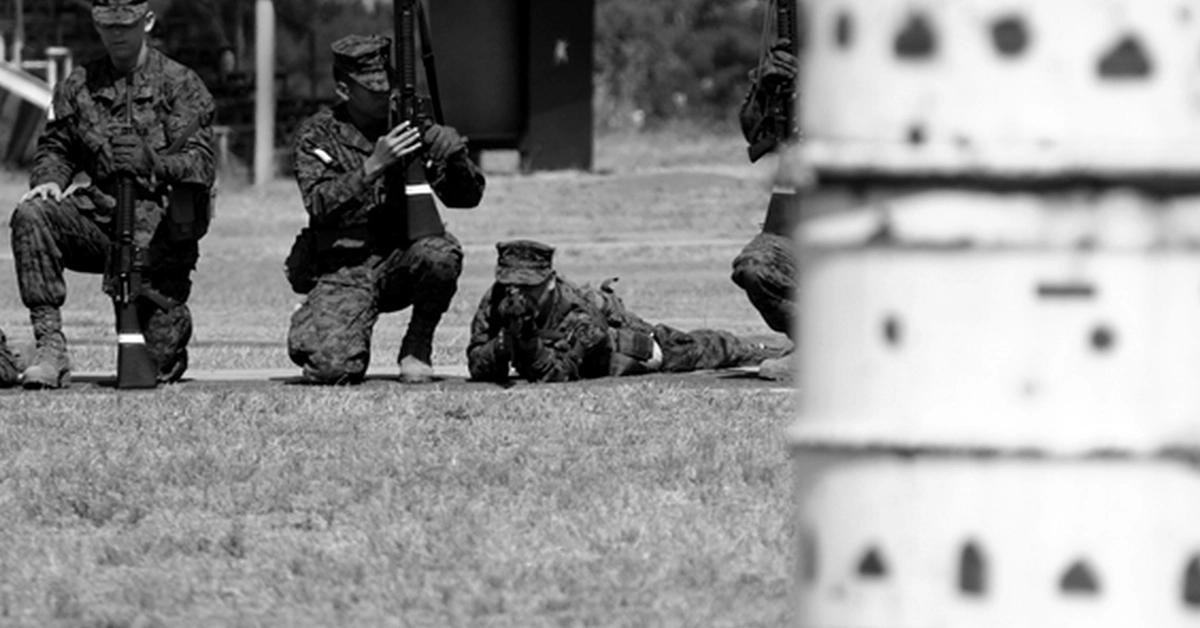
Every Marine who has been through a rifle range knows that picture.
Hours on the deck in the snap-in position. Dry firing. Adjusting. Dry firing again. No ammunition, no targets, no score. Just mechanics — repeated until they are automatic.
It feels like wasted time when you are doing it. It is the opposite of wasted time.
The same principle that produces accurate riflemen produces strong, durable athletes. And the same impatience that makes young Marines want to skip snap-in is the same impatience that produces injuries, plateaus, and wasted years of training effort.
Crawl, walk, run. It is not just a military training framework. It is how every skill worth having is actually built.
Why Progression Gets Skipped
Most people want results faster than the process allows.
They see someone strong, skilled, or fast and want to do what that person does — without accounting for the thousands of hours of foundational work that made those results possible. Klokov did not wake up one morning and decide to become a world-class weightlifter. He is the product of years of deliberate, progressive skill development. You cannot shortcut that by copying his programming.
This shows up constantly in training. Someone learns the deadlift in one session and immediately starts loading the bar as heavy as possible. Someone watches a pull-up tutorial and starts doing kipping variations before they have ten strict reps. Someone runs a 5k and signs up for an ultramarathon.
The result, almost every time, is the same: technique breaks down, something hurts, progress stalls, and they wonder what went wrong.
What went wrong is they skipped the crawl phase.
What Proper Progression Actually Looks Like
Before you add weight, speed, or complexity to any movement, you need to work through this sequence:
1. Understand the mechanics. Can you explain the movement? Can you verbally walk someone else through the key positions, the setup, the execution? If not, you do not know it well enough to train it under load. This is not academic — understanding the movement is what lets you self-correct when something feels off.
2. Perform the mechanics. Can you physically execute the positions with no load? If a bodyweight squat looks shaky, a barbell squat is going to look worse and feel dangerous.
3. Perform the mechanics consistently. One good rep is not enough. Can you produce the same movement pattern ten times in a row? Twenty? Under mild fatigue? Consistency of mechanics is what separates a skill from a lucky rep.
Only when you can check all three boxes do you have business adding load, speed, or complexity.
This is why CrossFit’s foundational coaching sequence — mechanics, consistency, intensity — is right even when the culture around it is sometimes wrong. The sequence is not optional. It is the order in which adaptation safely occurs.
Where People Get This Wrong in Practice
The most common pattern I see: someone gets comfortable with a light load and immediately chases heavier weight instead of deeper mastery.
Heavier weight with the same mechanics is appropriate progression. Heavier weight with degraded mechanics is just accumulated injury risk. The bar going up does not mean you are improving the movement — it might just mean you have found a compensation pattern strong enough to complete the lift.
Film yourself. Most people are shocked by the gap between what a movement feels like and what it actually looks like. Feeling strong through a squat and moving well through a squat are not the same thing. Video is the fastest way to close that gap.
The same principle applies to running, rucking, and conditioning work. In running mechanics, small technique inefficiencies create massive energy leaks over distance. In ruck training, poor posture under load compounds over miles in ways that accumulate into real problems. The mechanics matter at every intensity level — not just when lifting maximal loads.
The Three Rules
-
Start slow and increase speed with demonstrated proficiency. Not with time. Not with a schedule. With actual evidence that you own the movement at the current level.
-
More weight is not the answer if the mechanics are broken. Add weight to a broken movement and you get a more efficiently broken movement. Fix the movement first.
-
Be patient. This is the hardest one for people who already have the drive and discipline to show up. Patience is not passive. It is the deliberate choice to build correctly instead of building fast.
If you have stalled out on a lift, step back and watch yourself move. The plateau is almost always mechanical before it is a programming issue. Fix what is broken at the movement level and the numbers tend to sort themselves out.
Build On a Foundation That Holds
Understanding progression is one thing. Having a program that applies it correctly — one that sequences your training, manages your load, and keeps you moving forward without breaking you down — is another.
The Strategic Foundations Training Team is built around exactly these principles: daily programming that progresses intelligently, with coaching support available when you get stuck. Fourteen days free to see if it fits.
And for a deeper look at how these principles extend to long-term strength development, the long-term pursuit of strength and how to get strong are the natural next reads from here.