
Vitamin D: Why Military Athletes Need to Pay Attention to This Micronutrient
Most people tracking macros obsess over protein, carbohydrates, and fat — and completely ignore the micronutrients that support their training and health.
Vitamin D is one worth paying attention to.
It supports bone health and muscle function, and a deficiency can cause weak, painful muscles. Military service can mean long stretches indoors, irregular schedules, and limited access to your usual food. That makes your intake worth checking. It does not mean every military athlete is deficient or needs a high-dose supplement.
What Vitamin D Does
Vitamin D comes in two main dietary forms: D2 and D3.
D3 is the form your body produces when UVB rays from sunlight hit your skin. You can also get it from food and supplements. Mushrooms can provide D2. Both forms raise vitamin D levels, although D3 generally raises them more and maintains them longer.
The established reasons to get enough are straightforward:
- Vitamin D helps you absorb calcium and maintain healthy bones.
- It supports normal muscle, nerve, and immune function.
- A serious deficiency can cause bone disease and muscle weakness.
Low vitamin D levels have also been associated with several chronic diseases. That does not establish that low vitamin D caused them or that taking more will prevent them. In the large VITAL trial, 2,000 IU daily did not reduce the overall incidence of invasive cancer or major cardiovascular events in the studied middle-aged and older adults. Vitamin D supplements have also not shown an established fat-loss benefit. Correcting a deficiency matters; the broader supplement promises need more evidence.
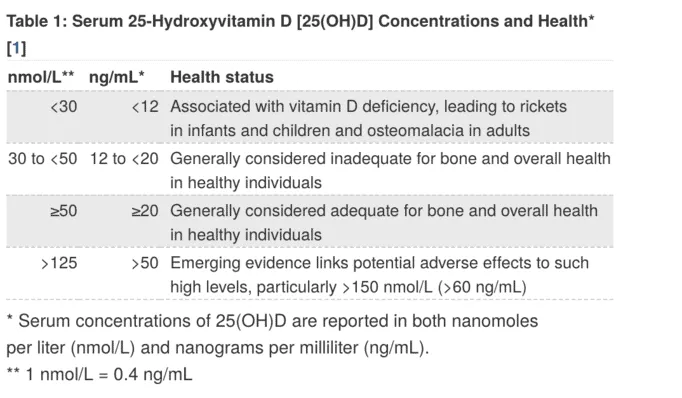
The table reflects the National Academies’ interpretation: below 30 nmol/L indicates risk of deficiency, 30 to below 50 may be inadequate, and 50 nmol/L or higher is enough for most people. These are general reference points. There is no established blood-level target that guarantees better athletic performance, and being below 75 nmol/L does not automatically mean you are deficient. The NIH vitamin D fact sheet explains these ranges.
How to Get Enough
Sun exposure helps your body produce D3. Skin pigmentation, season, latitude, clothing, and time outdoors affect how much you make. UVB does not pass through glass, so sitting by a sunny window does not do the job. Sun exposure is difficult to turn into a reliable dose, and increasing UV exposure comes with skin-cancer risk. Keep normal sun protection in place.
Diet can contribute substantially. Fatty fish, fortified milk or plant milks, and some fortified cereals are useful sources. Check the label; not every dairy product or plant milk is fortified. The recommended total daily intake is 600 IU for adults through age 70 and 800 IU after 70, assuming minimal sun exposure. That includes food and supplements, rather than an automatic supplement dose on top of your diet.
Supplementation can fill a gap when your usual intake falls short. D3 is a practical option. Check how much you already get from a multivitamin or other supplements before adding another product.
For adults, 4,000 IU per day from food and supplements is the usual upper intake limit, not a target. Higher doses may be used to treat a diagnosed problem under medical supervision. They are not a routine performance strategy. A three-year randomized trial found that 4,000 and 10,000 IU daily lowered some bone-density measures compared with 400 IU, without improving measured bone strength.
The practical first step is to look at your food and current supplements. The 2024 Endocrine Society guideline advises against routine vitamin D testing in generally healthy adults. If you have bone-health concerns, a condition affecting absorption, or another reason to suspect a deficiency, ask your clinician whether testing is useful. A confirmed deficiency deserves a treatment plan based on your situation.
If you want a specific supplement recommendation, Carlson Labs Super Daily D3 has been recommended by credible sources in the nutrition space and is widely available: Amazon link (affiliate link — verify it is current before purchasing).
References
National Institutes of Health, Office of Dietary Supplements. Vitamin D fact sheet for consumers and health professionals.
Endocrine Society. (2024). Vitamin D for the prevention of disease.
Manson, J., et al. (2019). Vitamin D supplements and prevention of cancer and cardiovascular disease. New England Journal of Medicine, 380, 33–44.
Burt, L., et al. (2019). Effect of high-dose vitamin D supplementation on volumetric bone density and bone strength. JAMA, 322(8), 736–745.