Will Red Meat and Bacon Give You Cancer? What the WHO Report Actually Said
A few years back, the World Health Organization released a summary of findings from over 800 studies on processed meat, red meat, and cancer risk. The internet promptly lost its mind.
Headlines declared that bacon was as dangerous as cigarettes. Vegans were insufferable for a week. And a lot of people either panicked unnecessarily or dismissed the research entirely — neither of which was warranted.
Here is what the report actually found, why the coverage was misleading, and how to think about nutrition headlines without getting whipsawed by every new study.
What the Research Actually Said
The WHO classified processed meats (bacon, hot dogs, deli meats) as Group 1 carcinogens — the same classification category as cigarettes and alcohol. This is where the cigarette comparison came from, and it is also where the media coverage went off the rails.
Group 1 means there is sufficient evidence that the substance can cause cancer — not that it causes cancer at the same rate or magnitude as other Group 1 items. Cigarettes and processed meat are in the same classification category, but smoking roughly doubles your lifetime cancer risk while the association with processed meat is far more modest — the research suggested approximately 18% increased risk of colorectal cancer for every 50 grams of processed meat consumed daily.
To put that in context: the absolute risk of colorectal cancer in the general population is around 5%. An 18% relative increase on a 5% baseline raises it to roughly 5.9%. That is meaningful as a public health consideration across hundreds of millions of people. It is not a reason to panic about occasionally eating bacon.
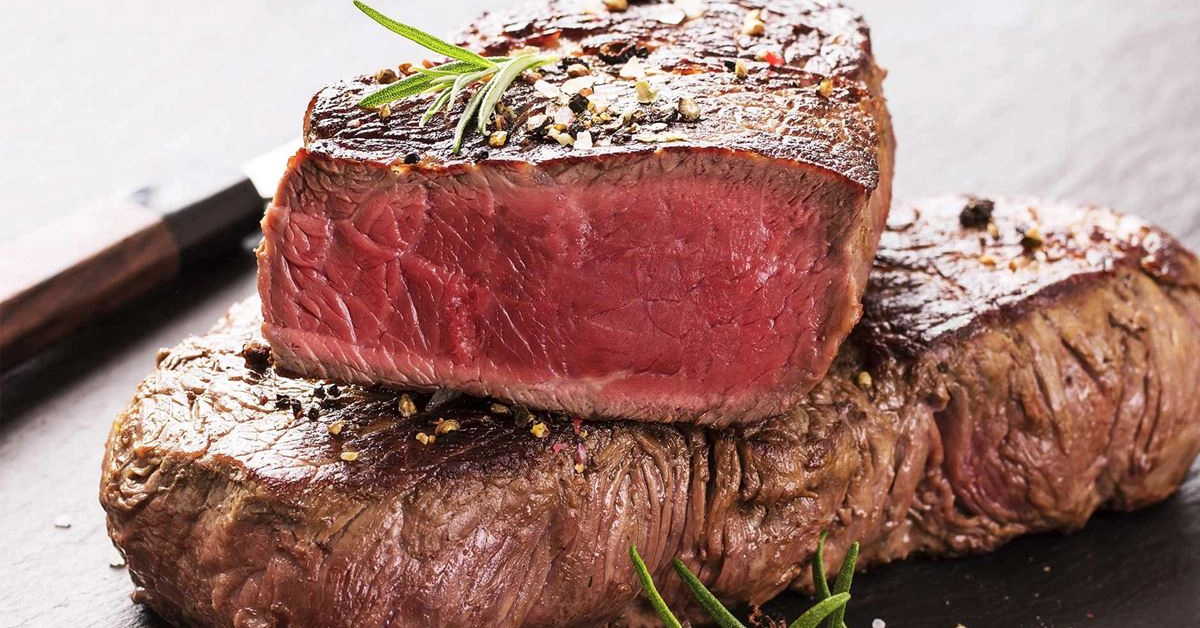
Red meat (unprocessed) was classified as Group 2A — probably carcinogenic — based on limited evidence. Critically, many of the studies showing this association did not adequately control for confounding factors like overall dietary quality, lifestyle, and the fact that processed meat consumption tends to cluster with other risk factors. Fresh red meat has a meaningfully different risk profile than processed meat, and lumping them together in coverage was inaccurate.
How to Think About Nutrition Research
The red meat coverage is a perfect illustration of how nutrition research gets distorted in transmission from study to headline:
Relative risk versus absolute risk: A headline that says “eating X increases cancer risk by 18%” sounds alarming. Adding the baseline context — “from 5% to 5.9%” — produces a different reaction. Both are accurate. Only one is useful.
Correlation versus causation: People who eat large amounts of processed meat also tend to smoke more, exercise less, and eat fewer vegetables. Isolating the contribution of the meat itself requires careful study design that many of the cited studies lacked.
Publication bias and confirmation bias: Research that confirms existing fears gets published and amplified. Research that complicates the story gets less coverage. And readers who are already worried about red meat will find the alarming articles more compelling regardless of their quality.
Every media outlet is in the business of clicks. Sensational headlines about food and cancer drive engagement. Nuanced coverage of relative risk and study methodology does not. This is not a conspiracy — it is just how media economics work.
The Practical Takeaway
The research suggests some reasonable adjustments: reducing highly processed meats (bacon, hot dogs, deli meats processed with nitrates) eaten daily is a sensible long-term dietary choice based on the evidence. Eliminating fresh red meat entirely based on the current evidence is not supported.
For military athletes and performance-focused people eating adequate total calories with reasonable dietary variety, red meat is a valuable protein and nutrient source — iron, zinc, B12, creatine — that does not need to be eliminated based on fear-driven headlines.
Be skeptical of anyone claiming they have the definitive answer to your diet. Nutrition science is genuinely complicated, individual responses vary, and any claim of universal black-and-white dietary rules should be treated with appropriate skepticism. Including this one.