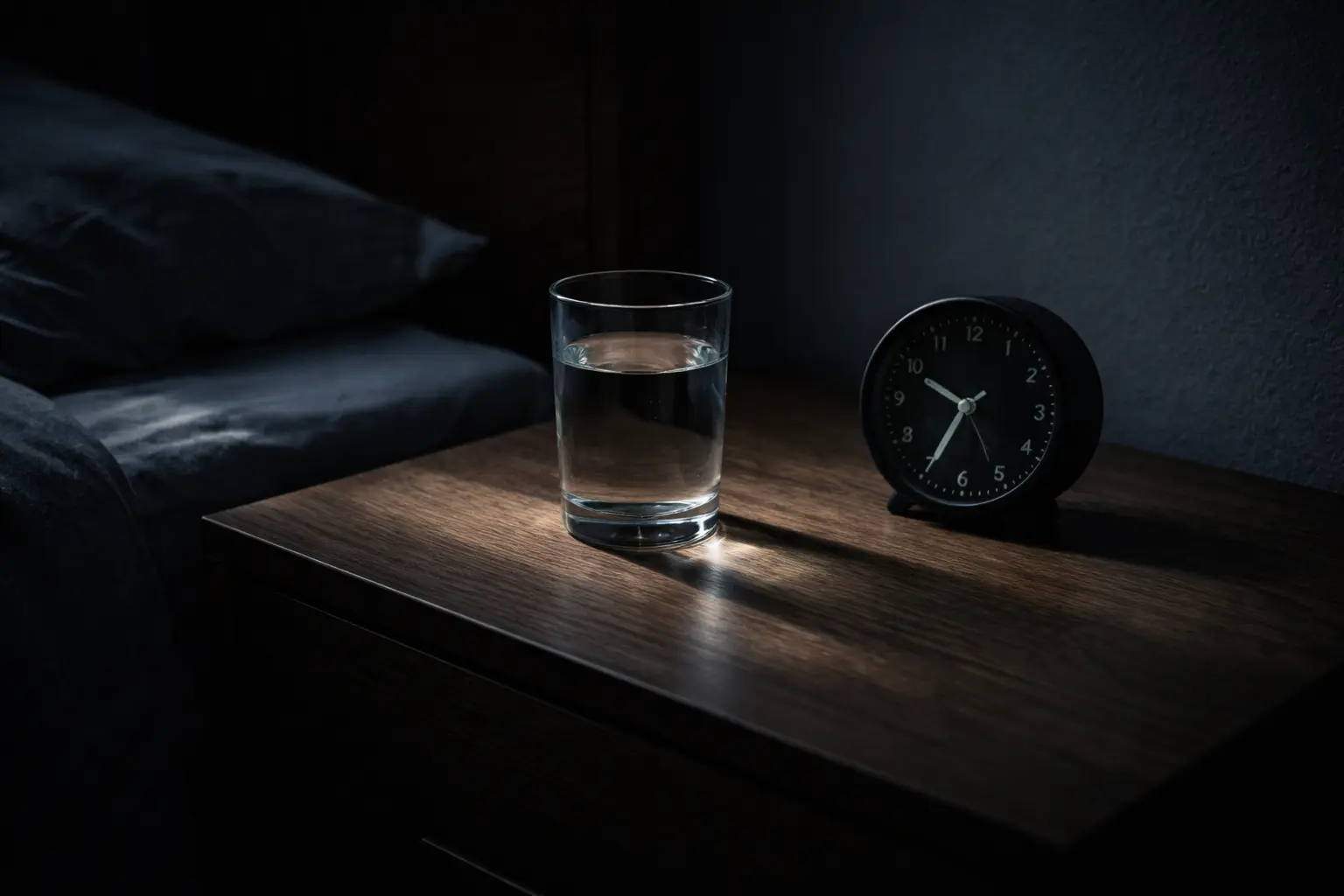
Sleep and Hydration: The Boring Advice That Actually Works
You’re tracking macros. You’re hitting your protein. You’ve downloaded the food logging app and you’re weighing your oats at 0600.
But you’re running on five hours of sleep and you haven’t finished a full water bottle before noon.
Here’s the thing: the nutrition optimization is real work, and it matters. But if you’re dehydrated and sleep-deprived, you’re not just leaving performance on the table — you’re actively working against yourself. The donut you’re so worried about is doing less damage to your body composition than the sleep debt you’ve been carrying for three months.
This article isn’t about exotic biohacking or the latest recovery product. It’s about two lifestyle variables that are free, unglamorous, and dramatically underrated.
Why These Two Get Ignored
There’s a whole industry built around selling you nutrition advice. Supplements, macro plans, meal timing protocols, body recomposition programs — all of it is monetizable. A coach can charge for it. A brand can bottle it.
Nobody is selling you “drink more water and go to bed earlier.” It doesn’t move units. It doesn’t scale into a course.
That’s a problem, because that advice — boring as it is — moves the needle faster than most of what people are paying for.
When you clean up sleep and hydration first, everything else gets easier. Your hunger signals normalize. Your energy for training improves. Your body’s ability to recover from hard sessions improves. Fat loss becomes less of a grind.
What Chronic Sleep Deprivation Actually Does
When you’re chronically under-slept, your body’s hormonal environment shifts in ways that make body composition goals significantly harder to achieve.
Ghrelin — the hormone that signals hunger — goes up. Leptin — the hormone that signals satiety — goes down. The net result: you’re hungrier than you should be, and less satisfied when you eat. This isn’t a willpower problem. It’s a biological response to insufficient recovery.
Sleep deprivation also elevates cortisol. Elevated cortisol drives fat storage, particularly around the midsection, and can increase muscle protein breakdown. You’re training hard to preserve muscle and burn fat, and your sleep schedule is fighting you the entire time.
There’s also the performance angle. Research consistently shows that sleep loss impairs reaction time, decision-making, and physical output. If you’re running on fumes, your training quality drops whether you notice it or not.
The best single piece of advice on sleep target comes from Robb Wolf: get as much as you can without losing your job or getting divorced. That’s not a joke — it’s a pragmatic acknowledgment that most people’s sleep problems are scheduling problems, not biological ones. If you can sleep more, sleep more.
For most adults, the evidence points to seven to nine hours as the optimal range. If you’re in the six-or-under camp because of work or kids or both, start by protecting the sleep you do have — consistent bedtime, cool dark room, no screens in the final hour. Small improvements compound.
What Chronic Dehydration Does
Most people walking around are mildly dehydrated most of the time. Mild dehydration — even as little as two percent of body weight — measurably impairs physical performance, cognitive function, and mood.
For a 180-pound athlete, two percent is about 3.6 pounds of water. You lose that through sweat, respiration, and normal metabolic processes before you’ve even started training. If you’re not actively replacing it, you’re already behind.
The body-composition connection is less obvious but just as real. Thirst is frequently mistaken for hunger. Mild dehydration can trigger cravings and unnecessary snacking — not because you need calories, but because your brain is sending a confused signal. Drinking consistently throughout the day short-circuits a lot of low-grade snacking before it starts.
On the performance side: hydration supports every system involved in physical output. Cardiovascular efficiency, thermoregulation, joint lubrication, muscular contraction — all of it degrades when you’re under-hydrated. You don’t feel dramatically worse. You just perform slightly worse across every metric, every session.
What to Actually Do
Neither of these requires a protocol. They require habits.
For sleep:
- Set a consistent wake time first. Everything else follows from that anchor.
- Back-calculate your target bedtime based on the hours you need.
- Drop the room temperature. Most people sleep better cool — somewhere in the 65–68°F range.
- Cut screens or shift to blue-light filtering in the hour before bed.
- If you’re on a training program, treat sleep as part of the program. It’s not recovery from training — it is training.
For hydration:
- Start with a full glass of water before coffee. Every morning, without exception.
- Carry water with you. If it’s in your hand, you’ll drink it. If it’s not, you won’t.
- Match your intake to your output. Heavy sweat sessions, hot weather, and alcohol all increase your requirements.
- A practical target: consume roughly half your bodyweight in ounces per day as a starting floor, and adjust up based on activity and conditions.
- Urine color is a reliable real-time indicator. Pale yellow means you’re close. Dark yellow means you’re behind.
Neither of these is complicated. The challenge is treating them as seriously as you treat your training and nutrition. Most people don’t, which is exactly why fixing them creates a visible difference quickly.
The Priority Sequence
If you’re in a hole on body composition or performance and you’re not sure where to start, this is the order:
- Sleep — get consistent with duration and schedule
- Hydration — drink consistently from the moment you wake up
- Protein — hit your daily target
- Everything else
Most people start at step four. They obsess over nutrient timing, carb cycling, and meal frequency while the fundamentals are a mess. The professionals selling them on those strategies have a financial incentive to keep the focus off the basics.
Start boring. The gains come faster than you’d expect.
For a deeper look at hydration specifically — how much, what counts, and how to adjust for training — this article covers it in detail: The Complete Guide to Hydration for Athletes.
What This Looks Like in Practice
One of the most consistent patterns I see: someone cleans up their sleep — goes from six hours to seven and a half — and within two to three weeks reports that their appetite is more manageable, their training sessions feel better, and they’re leaner without changing anything else. They think something else must have changed. Nothing did. They just removed the thing that was working against them.
The same pattern shows up with hydration. Start drinking consistently throughout the day, drop the afternoon snacking that was filling a gap hunger wasn’t actually creating, and body weight shifts without a deliberate caloric deficit.
These aren’t dramatic transformations. They’re quiet, reliable improvements that build a foundation for everything else to work better. That’s the whole game — remove the friction, let the system function properly.
Training Program
Want the training side handled?
Strategic Foundations is built around the same principle — efficient, structured training that fits real life. No junk volume, no guesswork. Just the minimum effective dose to stay strong and capable.
Keep Learning
- The Complete Guide to Hydration for Performance
- Why Sleep Is Your Most Underrated Performance Tool
- One Simple Method for Improving Body Composition
- Post-Workout Nutrition: What Actually Matters
- Stress Management for Better Performance
FAQ
How much sleep do I actually need?
Most adults need seven to nine hours for full recovery. The clearest sign you’re getting enough: you wake up without an alarm feeling rested. If that never happens, you’re likely in a chronic deficit. Start by protecting what you have — consistent schedule, dark cool room, no screens before bed — before chasing more hours.
Does coffee count toward my daily water intake?
Caffeine has a mild diuretic effect, but moderate coffee consumption (two to three cups) doesn’t significantly impair hydration for regular drinkers. It’s not a 1:1 substitute for water, but it’s not actively dehydrating you either. Don’t count it, but don’t stress about it. Just drink water alongside it.
Can poor sleep actually prevent fat loss?
Yes, directly. Sleep deprivation raises ghrelin (hunger hormone) and lowers leptin (satiety hormone), making caloric control harder. It also elevates cortisol, which promotes fat storage and muscle breakdown. You can be in a caloric deficit and still struggle to lose fat if you’re chronically sleep-deprived. Sleep is not optional — it’s part of the program.
How do I know if I’m dehydrated?
Urine color is the most practical indicator. Pale yellow means you’re hydrated. Dark yellow or amber means you’re behind. Thirst is a late signal — by the time you feel thirsty, you’re already slightly dehydrated. Don’t wait for thirst. Drink consistently throughout the day instead.
What’s the best way to drink more water without thinking about it?
Front-load it. Drink a full glass before your first coffee. Keep a water bottle visible and within reach. Set your environment up to make the right behavior easier. Most people don’t fail at hydration because they forget — they fail because nothing is prompting them to act. Make water the default, not the thing you remember at 3pm.
Getting the basics right isn’t exciting. There’s no product to buy, no protocol to follow, no discipline test to pass. You just have to decide that sleep and water matter as much as your training program — because they do. Fix those two things first and watch how much easier everything else gets.