Ruck It: Why Rucking Is One of the Best Mental Toughness Tools Available
Get under an uncomfortably heavy load. Go for a walk. Spend some time alone with your thoughts.
It sounds simple. And it is. That is exactly why it works.
The voices start early. “My shoulders hurt.” “Where is the turn around?” “Why am I doing this to myself.” And on they go — the internal negotiation that happens any time you put your body under sustained, uncomfortable load.
The ruck does not care about the voices. The miles still need to be covered.
The Cardiac Hill Story
At TBS, a 15-mile company ruck followed the same out-and-back course the unit had run before — just slightly further each time. On the final iteration, instead of turning back at the familiar point, the formation made an unexpected turn. Then another. Then the trail headed toward Cardiac Hill — a climb every single person in that formation knew and dreaded.
Twenty people dropped.
The formation turned around at the base of the hill without climbing it. The unexpected turns had added a total of half a mile. Eight hundred meters broke twenty Marines.
The ones who dropped were required to repeat the ruck the following weekend.
That story has stayed sharp for a reason: the physical demand was not what broke people. It was the prospect of additional suffering — the anticipation of more discomfort — that caused them to quit before the hill was even reached.
This is why rucking belongs in your training. Not primarily because of the cardiovascular or muscular benefits — though those are real — but because it gives you a controlled environment to practice not quitting when the voices get loud.
The Physical Case for Rucking
The mental argument is compelling on its own, but the physical benefits are genuine:
Fat loss: Sustained low-intensity movement under load is effective for fat loss. The caloric cost of rucking is higher than walking and the intensity is low enough to maintain for hours — making it one of the more practical long-duration fat loss tools for people who need to avoid high-impact volume.
Loaded movement fitness: If your job requires carrying loads over distance, you need to train that specific demand. No amount of running or gym work fully replicates the specific demands of sustained load carriage. Some time under a ruck is necessary. The load carriage mechanics post covers how to do it efficiently.
No specialty equipment required: A sturdy pack loaded with weight plates, bricks duct-taped together, or a sandbag is sufficient to start. Gear can be refined as the training progresses.
How to Get Started
Load approximately 25–30 pounds to start. Maintain the posture and mechanics covered in the ruck training mechanics post — chest up, midline braced, leaning slightly forward as a unit rather than bending at the waist.
Leave the headphones at home occasionally. The discomfort of being alone with your thoughts during a hard ruck is a feature, not a bug. Getting comfortable in that space is the whole point.
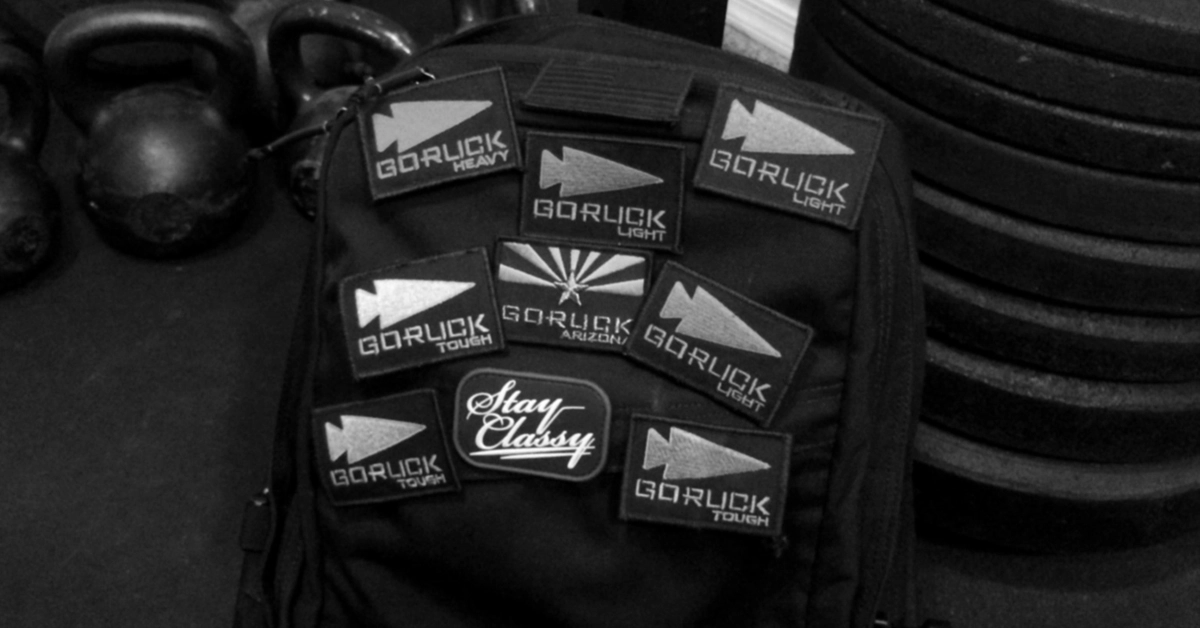
If you want accountability and a shared challenge, GORUCK events are worth considering — team events spanning 8–24+ hours that test both the physical and mental side in ways that solo training does not. I have completed 17 of them. They are the hardest things I have done since leaving active service.
For a complete look at how to structure ruck training efficiently — without the soul-crushing volume most programs demand — ruck training without soul-crushing volume covers the programming side.
The physical capability to ruck well comes from consistent strength training and smart endurance work. The mental capability comes from doing it. Both matter. Get after it.