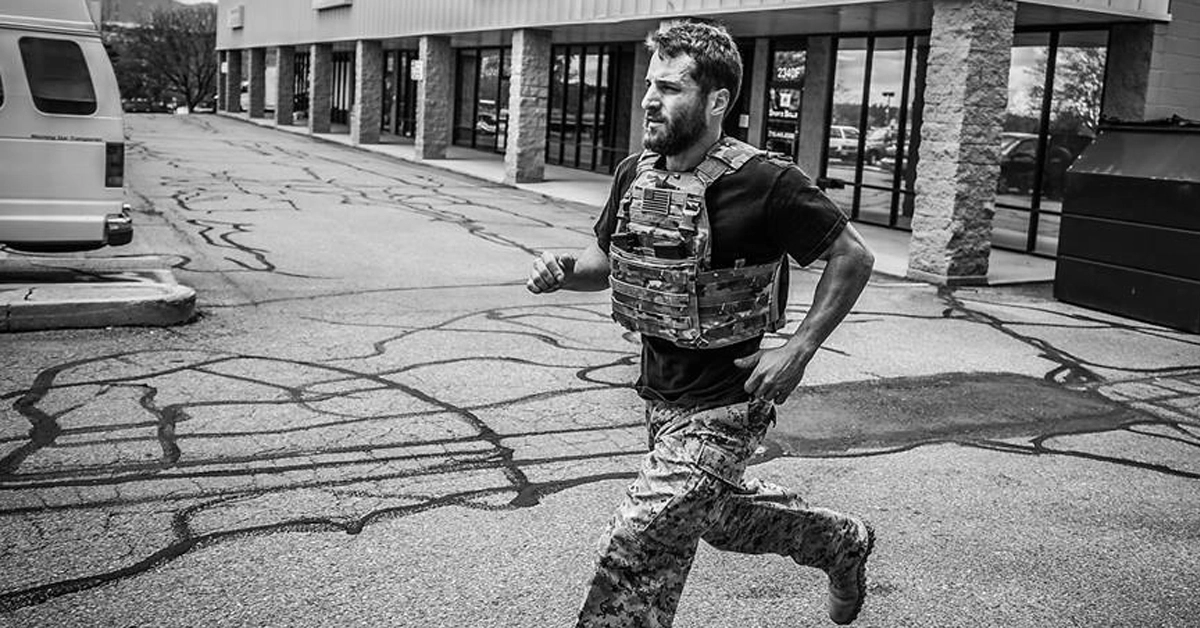
Running with a Weight Vest or Body Armor: What the Research Says
If you spend time in combat arms or law enforcement, running in kit is not optional. PPE alone runs 17–22 pounds before you add ammo, water, and everything else hanging from the MOLLE. A 2004 Army summary of an 82d Airborne Division field study in Afghanistan reported an average emergency approach-march load of 127 pounds.
So the question is not really whether you should be able to run loaded — you should. The question is how to train for it without the loaded running destroying your mechanics, beating up your joints, or producing marginal results compared to what you put in.
Here is what the research actually says, and a practical framework for adding it to your training intelligently.
The Benefits: Power Development
The most compelling research on weight vest training has nothing to do with running endurance — it is about power development.
Studies have shown that wearing a weight vest during training can improve power in athletes by up to 10% in as little as three weeks. Critically, most of these studies were conducted on trained populations — people who are already harder to produce adaptations in — which suggests the effect could be even greater for less experienced athletes. A resistance-only control group in comparable research saw only 8% improvement, and it took three months to get there.
Loaded jump training can improve jump performance in prepared athletes, but it is a separate advanced method—not proof that adding a vest makes ordinary plyometrics better or injury-free. External load changes the movement and can reduce speed or landing quality when it is too heavy.
Practical takeaway: Master the movement unloaded first. If external load is later used, keep it light enough that speed, alignment, and landing control remain intact. The Soviet Shock Method and plyometric progression guide explains where advanced variations fit.
The Running Evidence: More Complicated
The research on weight vest running specifically is mixed, and the honest answer is that the benefits are modest for most people.
One study using loads similar to body armor (8–10kg) found slightly improved VO2max and treadmill endurance compared to unweighted training after six weeks — but not significantly. Meaning unweighted training produced similar results. At that load, the vest simply is not heavy enough to meaningfully overload the lower body musculature.
Two biomechanical findings from the research are more important than the performance numbers:
1. Lighter is better for mechanics. A study comparing 9kg and 18kg vests found that the lighter load produced significantly better running kinematics and kinetics — more efficient movement, less mechanical breakdown. At heavier loads, athletes ran in a more crouched position, bent forward at the waist, with greater hip, knee, and ankle flexion during the stance phase. All of these are patterns associated with poor running mechanics and long-term injury risk — exactly what you see in military and LEO personnel who spend years running in heavy kit.
2. Loaded running increases ground contact time and impact forces. The foot spends longer on the ground with each stride, the peak vertical ground reaction force increases, and the metabolic cost goes up. If your mechanics are already inefficient, adding load amplifies every fault. If they are solid, the added stress produces useful adaptation.
The bottom line from the research: running with a weight vest is not inherently dangerous and can be a useful training tool — but only if you are strong enough and mechanically sound enough to handle it. The vest does not create problems; it exposes and accelerates problems that already exist.
The Prerequisites
Before adding loaded running to your training:
Mechanics first. If your unloaded running form breaks down — heel striking, forward trunk lean, overstriding — adding 20 pounds will make it worse faster. Fix the mechanics before adding the load. The approach to running efficiency covered here is the starting point.
Strength base second. Weak midline, weak glutes, limited hip mobility — all of these cause mechanical breakdown under load. A solid strength foundation is not optional if you want to run heavy without paying for it in your joints.
Start light and add gradually. The same principle that governs progression in any training modality applies here. Earn the right to add load by demonstrating clean mechanics at the current load first.
How to Structure It
Add one weighted run every other week, rotating which session gets the vest:
Sample two-week structure:
Week 1:
- Tuesday: Short intervals (10 x 100m, 30s rest) — unloaded
- Thursday: Long intervals (5 x 800m, 3:00 rest) — unloaded
- Sunday: 3-mile tempo — unloaded
Week 2:
- Tuesday: Long intervals (3 x 1 mile, 4:00 rest) — unloaded
- Thursday: Short intervals (4 x 400m, 2:00 rest) — 20lb vest
- Sunday: 5-mile time trial — unloaded
Rotate the vest across session types over subsequent weeks. The goal is periodic exposure to loaded running mechanics — not making every session harder by default.
During loaded runs: check your mechanics continuously. When trunk lean increases, when pace drops off a cliff, when that familiar ache returns — stop, reset, and either fix it or end the session. Loading a breaking movement pattern is the fastest path to an overuse injury.
If you want the full framework for building your running base the right way — mechanics, interval structure, and how to combine it with strength work — the Free 5-Part Endurance Mini-Course covers it. The same approach that produces better unloaded performance also sets you up to handle loaded running without breaking down.
Related Reading
- How to run faster without more miles — the mechanics and interval approach
- Ruck training without soul-crushing volume — loaded movement for longer events
- Plantar fasciitis: fix your feet and shin splints — the two most common injuries that show up when running mechanics break down under load
References
Clark et al. (2010). The longitudinal effects of resisted sprint training using weighted sleds vs. weighted vests. Journal of Strength and Conditioning Research, 24(12), 3287–3295.
Cross, Brughelli & Cronin (2014). Effects of vest loading on sprint kinetics and kinematics. Journal of Strength and Conditioning Research, 28(7), 1867–1874.
Silder, Besier & Delp (2015). Running with a load increases leg stiffness. Journal of Biomechanics, 48, 1003–1008.
Swain et al. (2010). Effects of training on physical performance wearing personal protective equipment. Military Medicine, 175(9), 664–670.