Full Range of Motion vs. Partial Reps: What Actually Matters for Strength
There’s a guy in almost every gym who has been squatting the same weight for five years. He loads the bar, dips down about a quarter of the way, grunts like the building is collapsing, and racks it. Big numbers. Impressive noise. Bicep-sized range of motion.
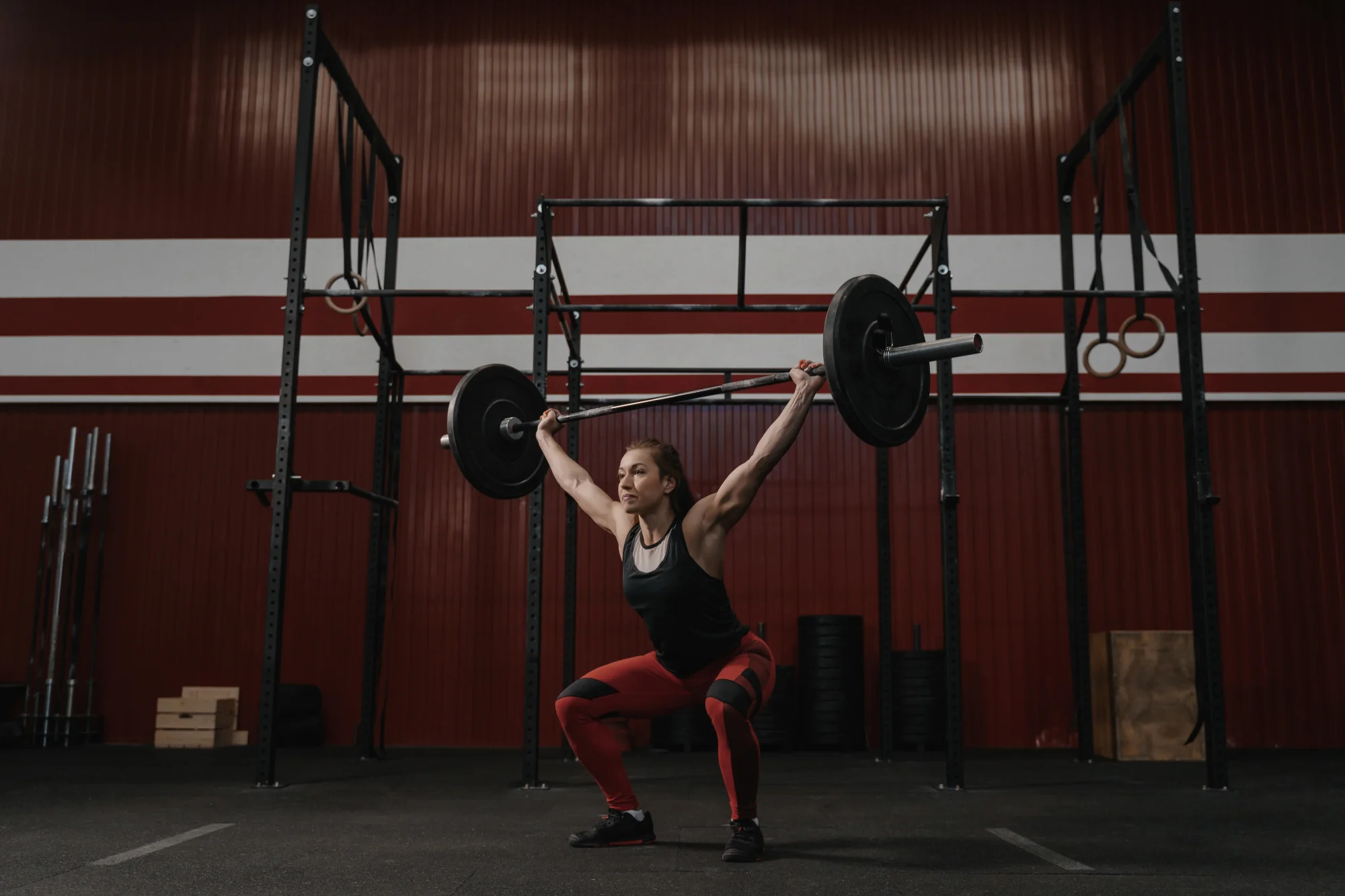
And then there’s the guy who squats half as much, moves through a full, clean range of motion, looks bored doing it, and keeps building strength through the range he actually wants to use.
The first guy isn’t training. He’s performing.
And the difference matters more than most people realize — especially if you’re a career military officer or veteran in your 30s or 40s who needs your body to hold up for the long run, not just look good loading a bar.
The question of full range of motion versus partial reps is one of those arguments that sounds like gym philosophy but is actually settled enough by research to give you a clear answer. Most of the time. With some important exceptions. Because it always depends — and the “depends” is the part worth understanding.
The Problem With How Most People Think About This
Most people approach the full-ROM versus partial-rep debate the way they approach most training questions: they pick a side and defend it forever.
Camp one says full range of motion is the only legitimate way to train. Anything else is cheating. Ass-to-grass or go home. Quarter squats are for people who want to look like they’re lifting without actually lifting.
Camp two says partial reps allow heavier loads, and heavier loads mean more strength. Olympic lifters and powerlifters use partial movements. Strongmen use partial movements. If it’s good enough for them, it’s good enough for anyone.
Both camps have a piece of the truth. Both camps are missing the larger picture.
The real answer depends on what you’re training for, what limitations you’re working around, and whether you’re building general physical capacity or trying to optimize one specific athletic metric. Let’s work through each of those.
What the Research Actually Says
The research on this question is more consistent than most gym arguments would suggest.
A 2021 review of 16 studies found that full ROM generally produced greater strength gains and lower-body muscle growth than the partial ranges tested. That is a useful starting point, not proof that full range wins for every muscle, exercise, or performance goal.
A 2020 squat study in the European Journal of Sport Science compared full, parallel, and half squats using the same relative loading progression. Full squats produced the broadest strength and performance improvements.
Partials also deserve a distinction. Short reps near the top of a movement are different from lengthened partials, which train the portion where the target muscle is stretched. A 2025 study in trained lifters found similar muscle growth and strength-endurance from lengthened partials and full ROM in the upper-body exercises tested.
For career military members and veterans training for general physical readiness — strength, endurance, durability, the ability to move and perform well across a broad range of tasks — this is the practical conclusion: train through a full range of motion, with the cleanest technique you can manage, at the heaviest load that still allows both.
That’s the baseline. Now for the exceptions.
The Belief That’s Worth Challenging Here
The false belief lurking in most training conversations about ROM is this: heavier is better, and more range is just a way to reduce the weight.
It’s a believable belief.
It shows up in how people train, how they program, and how they rationalize cutting depth on a squat or cutting range on a press. The logic goes: “I’d rather squat 300 pounds to parallel than 225 pounds to depth. The heavier load has to be better for strength.”
The number on the bar does not settle the question.
Load is one variable. Range — and the total mechanical tension placed on muscle through its working length — is another. Optimizing only for load, while ignoring range, can leave you strong in the partial range without developing the same strength through the rest of the movement.
For a 42-year-old officer who needs to be able to haul gear up a hillside, pick up a casualty, or pass a fitness test — not set a squat PR in a powerlifting meet with a special squat suit — training through a range you can control is a useful foundation. The run, carry, and test still need their own practice.
That’s the standard that matters.
The Squat Is the Best Example
Use the back squat and the picture becomes clear.
Squat depth has a significant and well-documented effect on muscle activation patterns.
Deeper squats change the demands on the lower body, but not every muscle responds the same way. EMG research found a greater relative glute contribution at deeper squat depths without the same increase in the measured quadriceps and hamstring contributions. A ten-week training study found greater glute and adductor growth with full squats; both full and half squats grew the knee extensors, while hamstring volume did not significantly change. Squats are useful. They do not replace every other leg exercise.
Partial squats — typically a quarter or half squat — allow heavier absolute loads and do produce strength gains, but the gains tend to be specific to the partial range. A quarter-squat specialist often can’t move load as efficiently through full depth because they haven’t trained that range.
This creates a practical problem for tactical athletes. Operational demands don’t limit their range of motion. Getting out of a vehicle, moving down a hillside under load, or recovering from an awkward position — these things happen through a full range of motion whether you’ve trained it or not. Training only a short range can leave the rest less practiced. Build that capacity gradually rather than assuming a partial-range PR covers every position.
Depth changes joint demands and requires enough movement capacity for the squat variation you’re using. But depth alone does not tell you whether a squat will injure you. A review of deep squatting and knee health does not support treating deep squats as inherently harmful in healthy, trained people. Load, training history, symptoms, and control matter too. Watch heel contact, knee tracking, and trunk control as coaching cues, not as a diagnosis.
The answer isn’t to avoid depth. The answer is to earn depth with your warm-up, use the load that allows you to hit it cleanly, and build from there.
When Partial Range of Motion Is the Right Call
Here’s where the “it depends” becomes genuinely useful, not just a hedge.
When your available range is the limiter. If you cannot reach your intended depth with control, reduce the load and train the deepest range you can manage comfortably. Gradually build from there. Mobility work can help, and resistance training itself can improve range of motion. Light warm-up sets are a place to explore your available range — not a requirement to force a depth you cannot yet tolerate.
When your goal calls for strength in a specific range. Partials can target a lockout or a position used in sport. That does not mean half and quarter squats consistently beat full squats for jumping. In one squat-depth trial, deep-squat groups improved jump performance while the quarter-squat group did not. Use partials when they serve the plan, and keep actual jump practice in the plan when jumping is the goal.
This isn’t a reason to abandon full ROM training. It’s a reason to be honest about what you’re training for. If you’re a 30-year-old Marine captain whose goal is operational readiness — a good run time, strong pull-ups, the ability to carry heavy loads and move efficiently — full ROM training should dominate your programming. If you’re a basketball player whose entire career depends on jumping as high as possible, the calculus changes.
When the joint is in a compromised state. This one is the most individual. If you’re managing a knee injury, a recent surgery, or a chronic pain pattern that makes deep squatting genuinely problematic, training to whatever depth allows pain-free, high-quality movement is more productive than grinding through a problematic range. The goal is to keep training — not to prove a point about depth.
The same principle applies to the shoulder in pressing movements, the hip in Romanian deadlifts, and the wrist in front squats and overhead work. Full range is the goal; pain-free training is the non-negotiable. If those two things are in conflict, pain-free wins.
What This Looks Like in Practice
For most career military officers and veterans training for general physical readiness, the practical application is straightforward.
Default to full range of motion on compound movements. Squats, deadlifts, presses, rows, pull-ups. If you can perform these movements through their full range with quality technique and without pain, do so. Choose the load that allows it — not the load that sounds impressive if you cut the range.
Use your warm-up to earn your training range. Before squatting heavy, squat light — through your available range, deliberately, and with control. This lets you check your available range and practice the movement before adding load. If your warm-up reps are ugly at the bottom, you’ve learned something. Fix it before you add plates.
Reduce load before you reduce range. If your form is breaking down at a given depth with a given weight, the answer is less weight — not less range. This is the ego wall most people run into, and it’s where the first guy in this article went wrong. He chose to protect the number on the bar. The right choice is to protect the movement quality, even if the number drops.
Be specific about your goals, and let them drive your programming choices. Training for a vertical jump? Practice jumping, and consider partial squats if they serve your strength plan. Training for general strength and readiness? Full depth is your friend. Dealing with a knee that complains at the bottom of a squat? Respect that — work on mobility outside of your main session and train to whatever clean depth you have available today.
Retest your capacity periodically. Mobility changes. What was a limited range six months ago may not be limited anymore if you’ve been working on it. Check in with your actual movement capacity every few months — don’t just keep training to the same depth because that’s what you did last year.
The Bigger Picture for Tactical Athletes
Here’s what I’ve seen over almost two decades of coaching military athletes: the officers and veterans who train well into their 40s and 50s are rarely the ones who moved the most weight. They’re the ones who moved well, consistently, through ranges that built real capacity rather than just impressive numbers.
A 315-pound quarter squat and a 225-pound full squat are different performances. Neither number predicts what someone’s knees will feel like in ten years. If your goal includes strength at full depth, test and train that depth rather than comparing numbers from different ranges.
This matters because operational and life demands don’t care about your partial-range PR. They care whether you can move well under load through a full range of motion when it’s required.
A 41-year-old athlete I worked with had spent years avoiding deep squats because “his knees couldn’t handle it.” When we actually addressed his ankle and hip mobility, which were the real limiters, he was squatting below parallel within four months. He became comfortable at depth again.
His words after his first clean set of full-depth back squats in years: “I forgot what actual leg training feels like.”
That’s the return on prioritizing range of motion. Not just stronger legs — a body that remembers how to move like it was supposed to.
Keep Learning
- Can You Get Stronger and Faster at the Same Time?
- How to Get Stronger: Absolute Strength
- The Long-Term Pursuit of Strength
- Should I Stretch Before or After I Workout?
- Strength and Durability
FAQ
Is full range of motion always better than partial reps?
No. Full ROM is a useful default for general strength, with good evidence for strength and lower-body muscle growth. Lengthened partials can also build muscle, and a chosen partial range may serve a specific goal. Match the range to the exercise, your capacity, and the outcome.
Why do some strong athletes use partial range of motion?
Because they’re often training for a specific goal where partial ROM is more relevant — a vertical jump, a lockout strength deficit in powerlifting, or a specific phase of an Olympic lift. Those can be useful additions to a general training plan. They do not replace practice through the other ranges you need.
What should I do if I can’t squat to depth without my form breaking down?
Start by reducing the load and checking your setup. Train to your current controlled, comfortable depth, then build range gradually. Mobility work may help, but anatomy, balance, symptoms, and the squat variation also affect depth. Persistent pain or a limitation you cannot resolve is worth getting assessed.
Does training through a full range of motion increase injury risk?
Full range does not automatically raise injury risk, and a clean-looking rep does not guarantee protection. Use a manageable load, build unfamiliar ranges gradually, and adjust when symptoms or fatigue change the movement. After an injury or surgery, follow the guidance for your return.
How do I know if my partial range is a programming choice or just an ego problem?
Ask what the partial range is supposed to accomplish. Then try less load and a setup that lets you move comfortably. A stable heel wedge may change your squat, but it does not diagnose ankle mobility or an ego problem. If changing the setup helps, use that information to choose your training range.
Train through full range when you can. Earn the range you don’t have yet. Reduce load before you reduce depth. These three rules applied consistently will build more usable strength than any amount of impressive-sounding partial-rep PRs.
Training Program
Want the training side handled?
Strategic Athlete Foundations is built around movements done well through real ranges — efficient strength and endurance programming for busy professionals who want capacity that holds up over time.
1% Better Every Day.