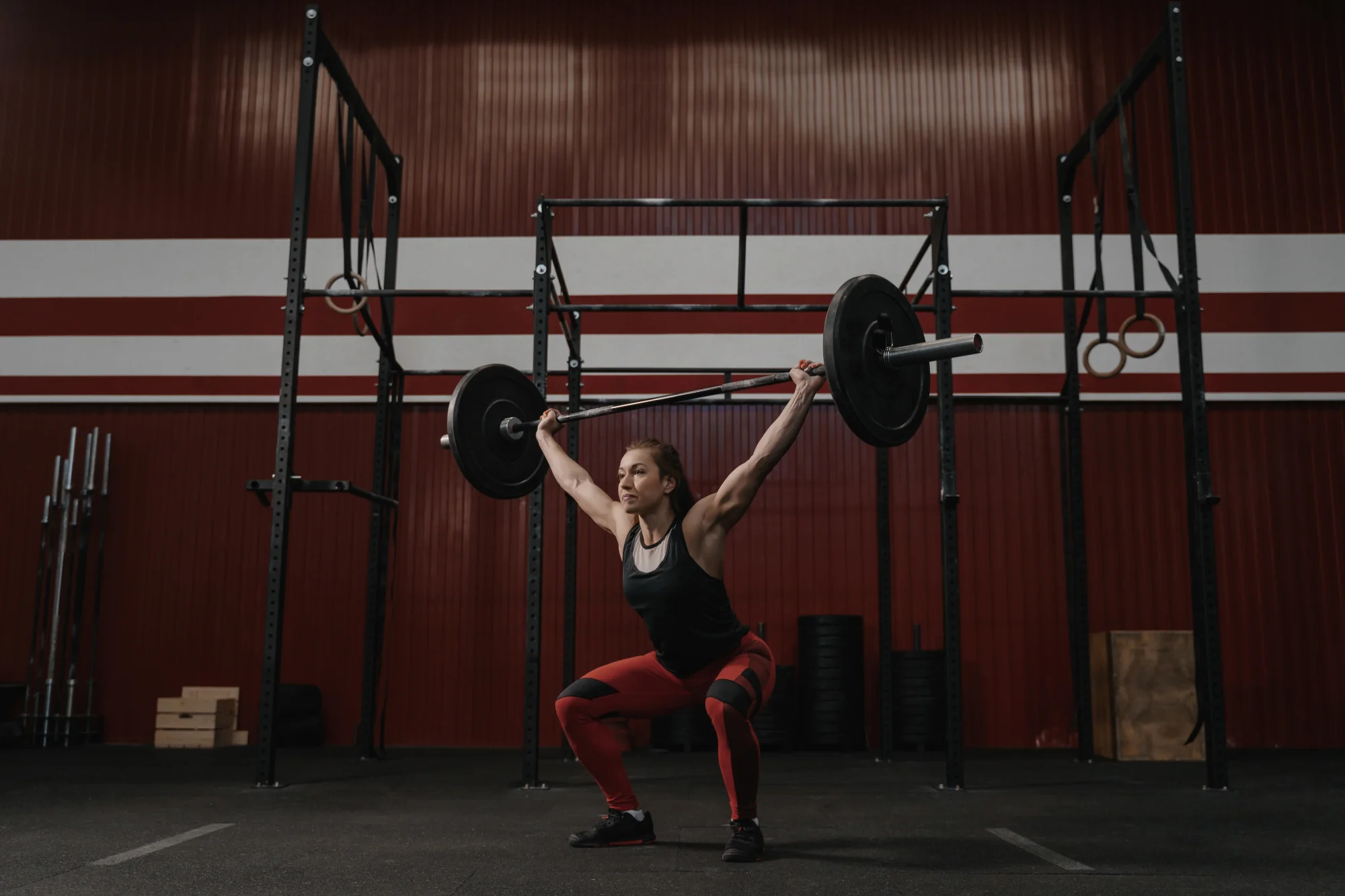
Get Stronger by Moving Faster: The Case for Explosive Lifting
Everyone understands that lifting heavy makes you stronger.
What fewer people understand is that lifting with fast intent can also build strength. It gives you another way to train instead of making every session a heavy grind.
This is not a new idea. Louie Simmons has been building monsters at Westside Barbell with this approach for decades. The conjugate method — alternating between maximum effort days (heavy loads, low reps) and dynamic effort days (submaximal loads, maximum bar velocity) — has produced some of the strongest athletes in the world. Research supports using explosive intent. And after years of programming it for military and tactical athletes, I can tell you it works in the real world too.
Here is the case for adding explosive lifting to your training and exactly how to do it.
What Explosive Strength Actually Is
Explosive strength is your ability to produce maximal force in minimal time. It is what separates an athlete who is strong from an athlete who is also powerful — and for military and tactical athletes, power is what matters in the field.
The Olympic lifts — snatch, clean and jerk — are the most obvious examples. But you do not need to be a weightlifter to train explosive strength. Plyometrics, jump squats, and submaximal barbell work performed with maximum intent all train the same quality.
A heavy deadlift may move at about the speed of your doubt even when you’re trying to lift it fast. Actual bar speed and intended speed are different. Heavy lifting builds force capacity; lighter explosive work lets you practice expressing force quickly. Heavy training can also improve rate of force development, so these qualities overlap.
In a six-week bench-press study, lifters using maximal concentric intent gained more strength than those deliberately moving at half their maximum velocity. That supports moving the bar with purpose, while keeping the movement controlled.
The Dynamic Effort Method
For dynamic effort squat and press work, 55–70% of your one-rep max is a useful starting range. Move it as fast as possible through the concentric phase while keeping the movement controlled. The goal of this session is bar speed, so choose a load that lets you sustain it.
That range is a programming choice, not a universal cutoff. Power research finds different useful loads for squats, jump squats, and Olympic lifts.
In practical terms: drive out of the bottom of the squat with explosive intent while keeping your feet planted and the bar under control. A loaded jump squat is a separate exercise. The intent matters — deliberately moving a light weight slowly is a different training choice.
From personal application: adding this style of training added 20 pounds to my deadlift and 30 pounds to my front squat — a 20-pound PR — in just a few weeks, alongside regular barbell work four times per week. Not the result of a perfect, optimized program. Just consistent application of the principle.
Variable Resistance: Bands and Chains
The conjugate method’s other major tool is accommodating resistance — adding bands or chains to the barbell so that the load increases as you move through the range of motion.
A 2026 meta-analysis by Li et al. found small average advantages for variable resistance in maximal strength and jump performance compared with free weights alone. Results depended on the equipment and how much of the load came from bands or chains. More variable resistance was not automatically better for speed or power.
Bands and chains change where the lift is hardest. As you reach a stronger part of the movement, more chain leaves the floor or the band stretches farther. That can be useful for a particular lift, but it does not automatically eliminate sticking points.
Source update, October 2026: the Soria-Gila meta-analysis previously cited here was retracted in 2018. The research summary above uses the later Li review.
The practical benefits:
- Changes the loading challenge — useful when you want more resistance in a stronger part of the lift
- Adds variety to a strength block — another tool to try when progress has stalled, alongside reviewing volume, load, and recovery
- Can improve strength and jump performance — with an appropriate setup; bands and chains are optional tools, not a requirement
One important note: this is a tool for athletes who already move well. Bands and chains added to a broken movement pattern will produce a faster broken movement pattern. Master the mechanics first, then add the variable resistance.
How to Add This to Your Training
You do not need to overhaul your program to get the benefits of dynamic effort work. Here are two practical ways to implement it:
If you train a major lift more than once per week: Make one session a max effort day (heavy loads, low reps, long rest) and one a dynamic effort day (55–70% of max, maximum bar speed, shorter rest). This is the classic conjugate alternation and it is extremely effective.
If you only train a major lift once per week: Alternate between max effort and dynamic effort from week to week:
- Week 1: Heavy back squat — work up to a heavy set of 3–5
- Week 2: Speed squat — 8–10 sets of 2 reps at 60%, maximum bar velocity
A few things to watch:
- Explosive lifting is a skill. Master the movement at normal speed before adding maximal intent — bad mechanics get worse when you add speed
- Start around 55–70% for this dynamic effort squat or press work. Adjust the load if speed or control falls; heavier explosive work has a place in other prescriptions
- Drive fast through the concentric. Do not crash uncontrollably into the bottom of the movement — control the descent, explode out of the hole
- More is not better here, especially early. A small dose of explosive work applied consistently will produce better results than a large dose applied sporadically
Explosive lifting can develop strength, power, and the ability to produce force quickly. Keep the dose small enough that you can maintain speed and recover for the rest of your training. The goal is to add a useful stimulus, not turn another session into a max-effort test.
The Bigger Picture
This post covers the dynamic effort side of strength development. For the research on whether you can build strength and endurance simultaneously without one undermining the other, the concurrent training breakdown is the companion piece. And for how to structure dynamic effort work specifically using EMOM protocols, strength speed training with EMOMs takes the next step.
All three together form a complete system. If you want that system laid out as a structured 8-week program without having to build it yourself, Strategic Strength is exactly that — three days per week of barbell work built around these principles.