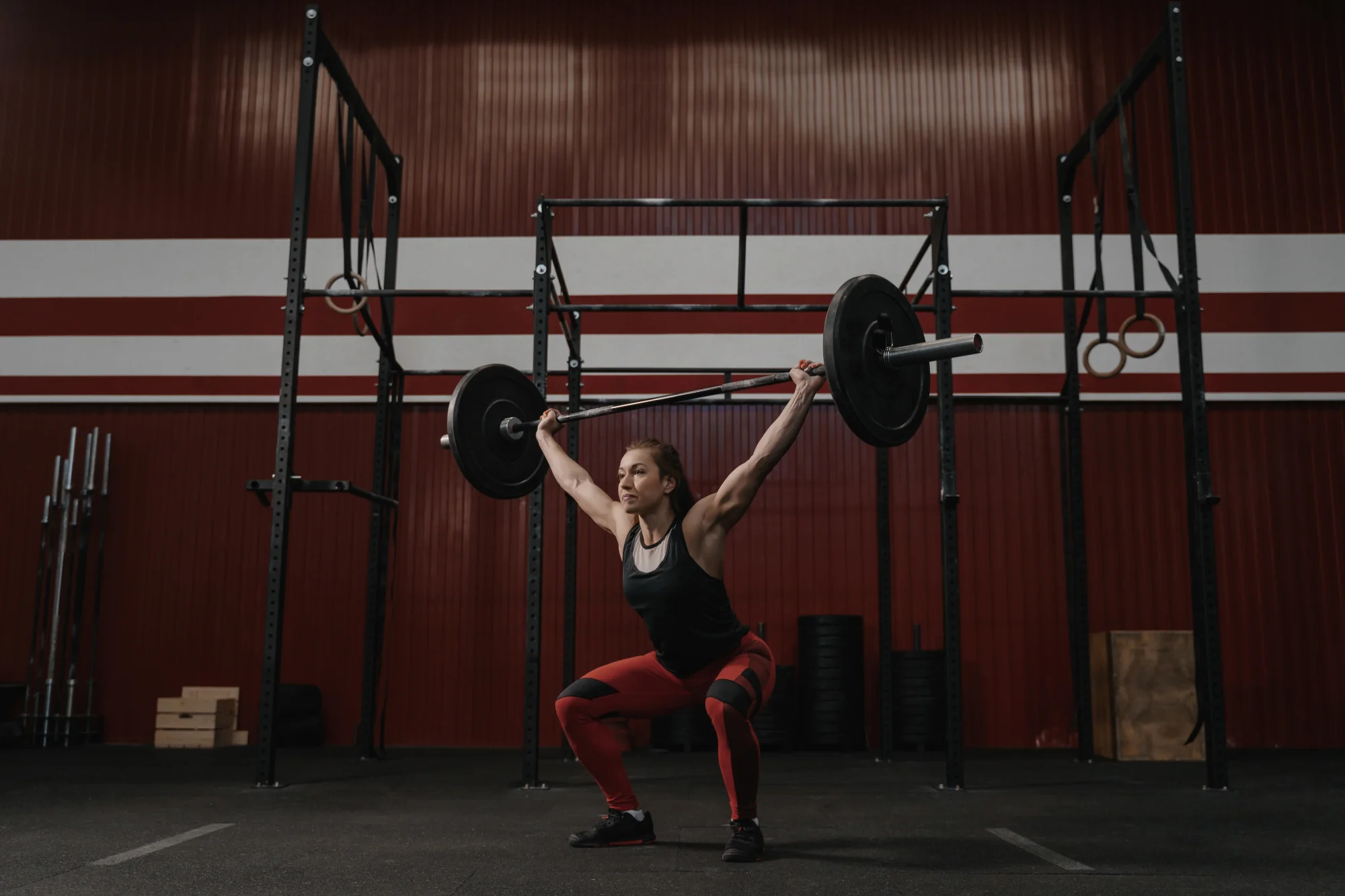
The GLP Training Problem: Losing Weight Without Losing Strength
GLP medications can help people lose a substantial amount of weight. Trials of semaglutide and tirzepatide have demonstrated that pretty clearly. For military officers and veterans carrying weight they haven’t been able to shake through training alone, that matters.
But once the scale starts moving, you need to ask a better question: what kind of weight are you losing?
When you lose weight quickly through a large caloric deficit, some of that weight can come from lean mass rather than fat. If you still need to ruck, run, lift, and generally be useful, watching the scale drop while your performance falls apart is a bad trade.
You can do quite a bit to protect your muscle. The two big priorities are resistance training and protein. This guide will show you how to handle both without turning food and training into a second full-time job.
What GLP Medications Actually Do to Body Composition
This isn’t a magic bullet.
GLP medications reduce appetite and calorie intake.
They don’t tell your body to burn only fat.
When you eat less, your body pulls energy from a mix of stored tissue.
That mix includes body fat, but it can also include lean mass.
In a body-composition substudy of the SURMOUNT-1 trial, people taking tirzepatide lost substantially more fat than lean mass, but lean mass still declined.
The medication was effective. The scale just did not tell the whole story. The SURMOUNT-1 body-composition study breaks down those changes here.
This is not unique to GLPs.
It can happen during weight loss by any method. The wrinkle with these medications is that you may not feel as hungry as you normally would in a large deficit, so eating far too little can sneak up on you.
Imagine that your appetite drops enough that you start averaging 1,200 calories and 80 grams of protein per day. The scale is moving, so everything looks great. A few weeks later, your pull-ups are down, your lifts feel awful, and your afternoon energy has disappeared.
That doesn’t prove you lost muscle, but it’s a good reason to look at your intake, recovery, and rate of weight loss with your clinician.
The medication helps create the conditions for weight loss.
Your training and nutrition influence how well you preserve strength and lean mass while it happens.
The Two Levers That Actually Protect Muscle
Resistance Training
A caloric deficit gives your body less energy to work with. Resistance training gives it a reason to hang on to the muscle you are actually using.
Resistance training is one of your best tools for preserving muscle during weight loss. It cannot guarantee that you will keep every ounce of lean mass, but skipping it removes an important protective signal.
If you use a GLP and have limited training time, keep strength work near the top of the list. Cardio still matters, especially when your job has a run or ruck standard, but it should not quietly replace every lifting session on your calendar.
What counts:
Resistance training needs to be challenging enough to force an adaptation.
The equipment matters less than the effort and progression.
Barbells work
Machines work
Bands and bodyweight movements can work too, provided the sets are hard and you make them more demanding over time.
Useful options include:
- Barbell or dumbbell compound movements at meaningful loads (squat, deadlift, press, row)
- Pull-ups and dips, with added weight when bodyweight becomes easy
- Machine work at loads that produce near-failure in the 5–15 rep range
- Loaded carries, heavy sled work, or loaded step-ups when barbell work isn’t available
The specific exercises matter less than using a movement you can load, repeat, and progress without beating up your joints.
Frequency:
Two or three resistance sessions per week is a practical target for most people. One solid session is still better than none. More is not automatically better when you are eating less and recovering more slowly.
Intensity and volume:
Train hard, but don’t turn every set into a near-death experience.
You do not need to hit failure constantly or cram six lifting days into a week.
When calories are low, recovery may be worse.
Start with two or three sessions, use challenging sets across the major movement patterns, and adjust the volume based on how your performance and recovery respond.
Cardio:
Don’t eliminate it, but don’t let it crowd out strength work.
The medications are already creating a deficit. Cardiovascular work that serves your performance requirements — run fitness, ruck capacity, conditioning — remains appropriate.
But adding high-volume cardio on top of aggressive caloric restriction and frequent strength work is a recovery burden your body may not be able to handle.
Prioritize minimum effective doses here too.
Protein Intake
Protein is the other essential lever.
During weight loss, dietary protein serves two critical functions: it supplies the amino acids needed for muscle protein synthesis, and it supports satiety in a way that helps you stay within a reasonable caloric window without bottoming out on total energy.
The difficulty with GLP medications is that they suppress appetite broadly.
If you are eating less overall and are not deliberate about protein, your protein intake can drop right along with everything else.
How much:
For healthy, active adults trying to preserve muscle during weight loss, roughly 1.6 to 2.4 grams of protein per kilogram of body weight per day is a useful coaching range.
Your appropriate target depends on your size, body composition, training, total calorie intake, and medical history.
If you have kidney disease or another condition that affects protein intake, this is a clinician conversation, not a macro-calculator contest. This position stand reviews protein intake during energy restriction and training.
For a 200-pound (91 kg) person, that broad range works out to approximately 145 to 218 grams per day.
You may not need the top end. Start with a target you can consistently hit and adjust it with an appropriate professional if needed.
That’s a lot of protein when your appetite is suppressed.
It requires treating protein as a deliberate training input rather than something you get passively from eating whatever sounds appealing.
Practical approach:
Anchor each meal around a protein source.
Not “include some protein,” but structure the meal so the protein is the primary ingredient and other components fill in around it.
Common anchors: eggs, Greek yogurt, cottage cheese, chicken, beef, fish, pork, and protein shakes when whole food options don’t fit the situation.
When appetite is low, liquid protein sources can be useful because they deliver a high protein dose without requiring you to eat a large volume of food.
A protein shake doesn’t feel like a meal when you’re not hungry, which makes it easier to hit your numbers even on low-appetite days.
Spreading protein across a few meals usually makes the total easier to hit than trying to rescue the entire day at dinner.
Three or four meals with a meaningful protein serving at each is a simple place to start. You do not need to set an alarm for amino acids every three hours.
What Insufficient Protein Actually Looks Like
This is worth making concrete, because the suppression of appetite on these medications can be deceptive.
You feel fine
You’re not hungry
You might even feel energetic
But there’s a quiet accounting problem developing.
Consider a hypothetical 200-pound athlete who is eating 1,200 calories and getting 80 grams of protein per day because food suddenly feels optional.
That intake may be well below the athlete’s protein target, and the total calorie intake may also be too low.
If that pattern continues while strength and energy slide, it deserves attention rather than another congratulatory high five from the bathroom scale.
The training fix is straightforward. The nutrition fix requires a system.
Tracking protein for the first few weeks can show you whether your normal meals still cover your needs. You do not need to track forever.
You just need enough information to stop guessing.
Building the Week: A Practical Framework
Here’s a template that covers the training and nutrition priorities without requiring more time or complexity than the situation warrants.
Session Structure (2–3 Resistance Sessions per Week)
Session A: Lower Body and Pull
- Squat or deadlift pattern: 4 sets × 6–8 reps at a challenging load
- Hip hinge (Romanian deadlift, good morning, or single-leg variation): 3 sets × 8–10 reps
- Pull-up or lat pulldown: 4 sets × 6–10 reps
- Row variation: 3 sets × 8–12 reps
- Optional: loaded carry or sled push, 3–4 sets
Session B: Upper Body Push and Core
- Bench press or dumbbell press: 4 sets × 6–8 reps
- Overhead press: 3 sets × 8–10 reps
- Dip or incline press: 3 sets × 8–12 reps
- Triceps and shoulder accessory: 2–3 sets each
- Plank or loaded carry variation: 3 sets
Session C (if running three days): Full Body or Weak Point
- Deadlift or trap bar deadlift: 4 sets × 5–6 reps
- Pull-up: 4 sets to near failure
- Dumbbell press or incline variation: 3 sets × 8–10 reps
- Leg press or split squat: 3 sets × 10–12 reps
- Row or face pull: 3 sets × 12–15 reps
The two-day version is entirely sufficient for muscle preservation. Three days allows for more volume and a bit more flexibility for lagging areas.
Cardio and Conditioning
Keep your run fitness and ruck work. Don’t eliminate it.
But on the days where energy is clearly low — which will happen when calories are suppressed — pull back on volume and intensity before you pull back on resistance training.
For example, a week for someone who also needs to maintain run fitness might include:
- 2–3 runs per week: one easy run (30–45 min at a conversational pace), one structured run (intervals or a tempo effort), one longer easy run if schedule allows
- 1–2 ruck sessions if tactically relevant
- Rest or active recovery on remaining days
Don’t add conditioning work to resistance training days unless recovery is clearly strong. Separate them when possible.
Example Daily Protein Strategy
This is an example for someone whose target falls around 140–180 grams per day, not a prescription for every reader:
- Morning: 40–50g protein — eggs, Greek yogurt, cottage cheese, or a protein shake if appetite is low
- Midday: 40–50g protein — chicken, beef, fish, or any whole protein source as the center of the meal
- Post-training or afternoon: 30–40g protein — another whole food meal or a shake
- Evening: 30–40g protein — dinner built around a protein anchor
Total: 140–180g per day in this example. Your target may be lower or higher.
If you can only manage three eating windows because appetite is that suppressed, concentrate protein even more deliberately in each window. 50+ grams per meal across three meals covers you at 150+ grams.
Defining What Success Looks Like
The scale is only one piece of feedback. Pay attention to the rest of the dashboard too.
Signs the protocol is working:
- Scale weight is declining at a rate you and your doctor consider appropriate for your starting size, health, and treatment plan.
- Strength numbers are holding or declining only slightly. Stable lifts do not prove that you have preserved all your muscle, but they are useful performance feedback.
- Your performance metrics — run times, ruck times, conditioning benchmarks — are holding steady or changing at a manageable rate.
- You still feel physically capable. A rough session happens. A steady collapse in your ability to train is different.
Signs something needs to adjust:
- Strength is declining rapidly across several workouts, not just during one lousy Tuesday session.
- You feel exhausted even on low-volume training days.
- Protein intake is consistently below 1.2g/kg/day despite effort to hit your targets.
- Weight is dropping much faster than you and your clinician planned.
If those signs show up, review your protein, total food intake, training load, sleep, and recovery.
Bring persistent fatigue, unusually rapid weight loss, trouble eating enough, or possible medication side effects to the prescribing doctor.
Don’t freelance a dose change because your deadlift had a bad day.
Focus on these two questions: How do I look and feel today? & How did I perform?
The Transition Question: What Happens When You Stop
GLP medications may be used as long-term treatment. Some people still stop because of side effects, cost, insurance changes, availability, or a decision made with their clinician. If you are considering that transition, plan for it instead of assuming your appetite and body weight will quietly stay where they are.
Weight regain after stopping treatment is common. In the STEP 1 extension, participants regained about two-thirds of their prior semaglutide-associated weight loss during the year after treatment and lifestyle support ended.
That doesn’t tell you exactly what will happen to you, but it is a much better planning assumption than “I reached my goal, so I guess biology is finished now.” Read the STEP 1 extension results here.
Keeping your strength work and protein habits in place gives you some continuity if your appetite changes. It does not make you regain-proof, but it’s better than trying to invent a maintenance plan after the medication is already gone.
If you’re approaching the transition, a few practical adjustments help:
- Gradually increase protein as appetite returns, staying at or above your target even when food becomes more appealing again.
- Keep the resistance training schedule. Don’t treat training as something you did during the weight-loss phase. It’s the maintenance strategy.
- Add volume and complexity to training progressively as caloric intake normalizes. This is an opportunity to push into actual strength gains now that recovery is less compromised.
- Monitor the trend. Decide with your clinician what amount of regain should trigger a nutrition, activity, or treatment conversation.
Common Mistakes to Avoid
Relying only on the medication. The medications can help reduce calorie intake, but they do not replace the training required to maintain strength and physical capacity.
Dropping protein because you’re not hungry. Appetite suppression is not a signal that you don’t need protein. It’s a signal that eating feels optional. It isn’t — not for this outcome.
Prioritizing cardio over strength. Understandable. Running and rucking are tactically relevant. The mistake is letting cardio crowd out all the strength work that supports muscle retention.
Treating low energy as normal indefinitely. Some reduction in energy during training is expected under caloric restriction. But if you’re consistently unable to train at a meaningful intensity — if sessions feel impossible rather than just harder — that’s a signal that the deficit may be too aggressive and worth discussing with your prescribing physician.
Not tracking protein, even temporarily. If your appetite and portions have changed, your old guess about protein intake may no longer be useful. Track it briefly, get a real number, and adjust from there.
Assuming muscle is being preserved because the scale looks good. Scale weight is a rough proxy. Losing 20 lbs in 10 weeks while your pull-up max drops from 15 to 8 is not a success story. Monitor performance metrics alongside scale weight.
A Note on Creatine
Creatine monohydrate deserves a mention here because it is one of the most well-supported performance supplements available and is particularly relevant during weight-loss phases where muscle and strength preservation are the goal.
Creatine supports intramuscular phosphocreatine stores, which improve performance in short-duration high-intensity efforts — exactly the kind of work that resistance training involves.
It’s widely used in the context of resistance training, and its use across a wide range of populations is well-established in practice.
For many healthy adults doing resistance training, 3–5 grams of creatine monohydrate per day is a common approach. It’s not a replacement for training or protein. If you have kidney disease, take other medications, or have questions about whether it fits your treatment plan, ask your clinician first.
Creatine can increase water stored in muscle, so the scale may move differently after you start it. That is not the same as gaining body fat. Yet another reason not to let one bathroom number run your entire operation.
More about creatine if you’re interested here: Creatine: Useful Tool or Wellness Hype?
Applying This to Real Life
You are probably fitting training around work, family, and everything else already fighting for space on the calendar. A GLP does not make that schedule simpler. It just makes being deliberate about food and recovery more important.
Keep the plan simple. Use the medication as prescribed. Lift at least twice per week when your schedule and recovery allow. Set a realistic protein target and check that you are actually hitting it.
For many people, that can look like two 45–60 minute full-body sessions and protein-centered meals, with a shake available when appetite is low. Your exact plan may be different. The point is to build something you can repeat while watching how your body and performance respond.
Frequently Asked Questions
Can I build muscle while using GLP medications?
Yes, it is possible, especially if you are new to lifting, returning after time away, or carrying more body fat. It generally gets harder as the calorie deficit becomes larger and as you become more highly trained. During active weight loss, preserving the muscle you already have is still a very good result.
What if I can only train once a week?
One resistance training session per week is meaningfully better than zero and provides some muscle-retention stimulus. But two sessions per week significantly improves the signal. If schedule genuinely limits you to one session, make it full-body, hit the major movement patterns, and prioritize load over volume.
Should I adjust my protein target as I lose weight?
Adjust based on your target lean mass rather than your total scale weight. As you lose body fat, your protein target per kilogram of body weight stays roughly the same, but your total weight is lower. The practical implication: don’t reduce protein in direct proportion to total weight lost. Keep protein intake stable or reduce it only slightly as you approach your goal weight.
How long does it take to notice if the protocol is working?
Give the plan several consistent weeks, then look at the trend in strength, energy, recovery, body weight, and how your clothes fit. No single measure settles the question. If several markers are moving in the wrong direction, review the plan with your coach and clinician.
What should I do if I can’t hit my protein target some days?
Don’t let a single low day derail the week. On very low-appetite days, prioritize liquid protein sources — shakes, Greek yogurt, cottage cheese — because they require less volume of food to deliver a meaningful protein dose. One or two lower-protein days in a week won’t undo your progress. Chronically short protein intake over weeks will.
Is there anything I should discuss with my physician before starting this protocol?
Yes. I’m an idiot and can get you fitter but this doctor stuff is for the doctors… #disclaimer
Before changing your training load significantly or adjusting your dietary approach while using a GLP medication, it’s worth a conversation with the prescribing physician — particularly if you have any underlying conditions that affect how your body handles exercise, fasting, or high-protein intake. The framework here is practical coaching guidance, not medical advice.
Keep Learning
- Training for strength and endurance at the same time
- How to get stronger: a practical approach to absolute strength
- Protein timing and post-workout nutrition
- Why consistency beats intensity in the long run
- Training with limited time: how to get results anyway
1% Better Every Day.