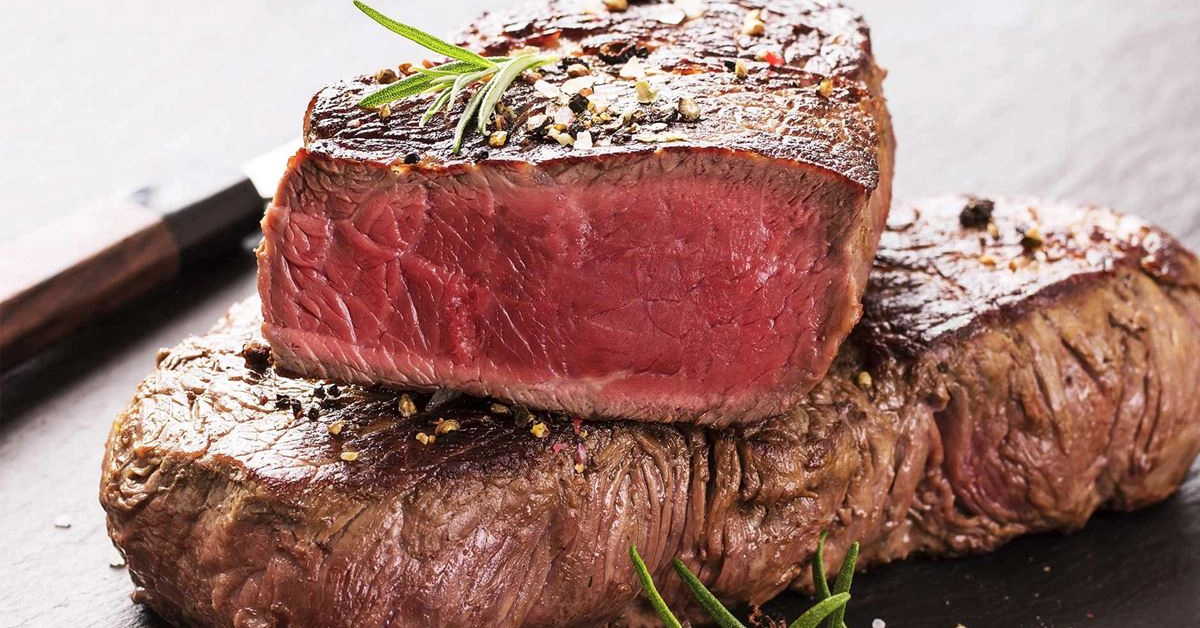
Will Red Meat and Bacon Give You Cancer? What the WHO Report Actually Said
On October 26, 2015, the International Agency for Research on Cancer (IARC), the World Health Organization’s cancer agency, announced its assessment of red and processed meat. Its working group considered more than 800 studies. The internet promptly lost its mind.
Headlines declared that bacon was as dangerous as cigarettes. Vegans were insufferable for a week. And a lot of people either panicked unnecessarily or dismissed the research entirely — neither of which was warranted.
Here is what the report actually found, why the coverage was misleading, and how to think about nutrition headlines without getting whipsawed by every new study.
What the Research Actually Said
IARC classified processed meat as Group 1 — carcinogenic to humans — because there was sufficient evidence that eating it causes colorectal cancer. Tobacco smoking and alcoholic beverages are also in Group 1. That shared category is where the cigarette comparison came from.
The category describes how strong the evidence is that an exposure can cause cancer. It does not tell you how much risk it creates at a particular dose. Sharing a category does not make bacon as dangerous as smoking.
Processed meat means meat preserved or altered through salting, curing, fermentation, smoking, or similar processes. Bacon, ham, hot dogs, and many deli meats fit that definition. It is not limited to products with added nitrates, and it can include poultry.
Unprocessed red meat means mammalian muscle meat, including beef, pork, and lamb. IARC classified it as Group 2A — probably carcinogenic — based on limited evidence in humans and strong mechanistic evidence. The strongest human association was with colorectal cancer. That is a different evidence judgment from the one for processed meat, not a clean bill of health.
What About the 18% Number?
The original 2015 IARC announcement reported an estimated 18% increase in colorectal-cancer risk for each additional 50 g of processed meat eaten daily. This describes habitual intake, not the effect of one breakfast. It is a historical population estimate, not a precise prediction for you.
That 18% is a relative increase. It is not an 18-percentage-point increase in lifetime risk.
For a hypothetical example, if a comparable lower-intake group had a 5% risk over a given period, an 18% relative increase would mean 5.9% over that same period: an increase of 0.9 percentage points, or about 9 additional cases per 1,000 people. The 5% here is just an illustration, not an established baseline for every reader or for people who eat no processed meat.
The absolute difference depends on the baseline risk and the time period being measured. A smaller individual increase can still matter across a population. Neither the percentage nor the classification tells us that every person who eats bacon will get cancer.
How to Think About Nutrition Research
The red meat coverage is a useful illustration of how nutrition research gets distorted in transmission from study to headline:
Relative risk versus absolute risk: Look for both. They describe the same finding from different angles, and you need the baseline and time period to put the percentage in context.
Observational evidence and its limits: Much of the evidence comes from studies following people and their diets over time. Researchers can adjust for smoking, activity, and other dietary habits, but imperfect diet measurements and residual confounding remain possible. That makes estimating the exact effect difficult. It does not erase the evidence: IARC considered human studies alongside mechanistic research and judged the evidence sufficient for processed meat, but limited for unprocessed red meat.
Publication bias and confirmation bias: Check how a review selected and evaluated its studies rather than assuming that an alarming result is biased. And don’t just collect links that agree with what you already wanted to believe. Read the actual assessment and check whether a headline has kept its qualifications.
Sensational headlines drive clicks. That is a reason to check the source, not a reason to dismiss the finding. Nuance about risk and study design often gets lost on the way to a headline.
The Practical Takeaway
Reducing processed meat is a sensible long-term dietary choice. The World Cancer Research Fund recommends eating very little, if any, processed meat. For people who eat red meat, it recommends no more than about three portions per week, roughly 350–500 g in cooked weight. That recommendation is not a proven safe threshold.
You do not have to treat fresh red meat and bacon as interchangeable. You also should not read the weaker classification for fresh red meat as permission to eat unlimited amounts. Red meat provides protein, iron, zinc, and vitamin B12, but it is not essential for obtaining those nutrients. Amount, processing, overall dietary pattern, and individual health circumstances matter.
Be skeptical of anyone claiming they have the definitive answer to your diet. Nutrition science is complicated, individual circumstances vary, and a headline is a poor substitute for reading the evidence. Including this one.
Sources
- International Agency for Research on Cancer. IARC Monographs evaluate consumption of red meat and processed meat. October 26, 2015. The original announcement, including the 18% relative-risk estimate.
- International Agency for Research on Cancer. Red Meat and Processed Meat, IARC Monographs Volume 114. 2018. The detailed assessment following the 2015 evaluation.
- World Health Organization. Carcinogenicity of red and processed meat. Updated September 23, 2026. Explains the classifications and evidence; this revised Q&A no longer includes the historical 18% estimate.
- World Cancer Research Fund. Limit consumption of red and processed meat. Cancer-prevention recommendations and supporting evidence.
Publication-date note: The inherited September 2014 date shown for this article predates the October 2015 assessment discussed here. That date was already present in the earliest available repository version. The original publication date has not been verified.