Why Your Knees Hurt (And Why the Fix Probably Has Nothing to Do with Your Knees)
After enough years of rucking, running, lifting, standing post, and sitting in vehicle seats that were clearly designed by someone who hates spines, the knees start to speak up.
At first it’s just stiffness going down stairs. Then it’s a dull ache after long runs. Then it’s the kind of grinding sensation that makes you quietly wonder if you’ve got a surgery in your future.
Most guys in the military and veteran community chalk it up to mileage. “My knees are shot,” they say, like it’s a diagnosis and a final verdict in the same breath. They back off training, swap running for nothing, and hope the problem resolves on its own.
It usually doesn’t. But the painful joint is not always the only factor worth assessing.
The Knee Can Be Part of a Larger Movement Problem
This is the core concept behind what coaches and physical therapists call the “pain site vs. pain source” distinction. It can broaden an assessment, but it should not be used to dismiss the painful joint.
The knee primarily flexes and extends, with some rotation and translation across normal movement. Symptoms can emerge when training load exceeds current capacity, when local tissue is irritated, or when movement and strength elsewhere change how force is distributed.
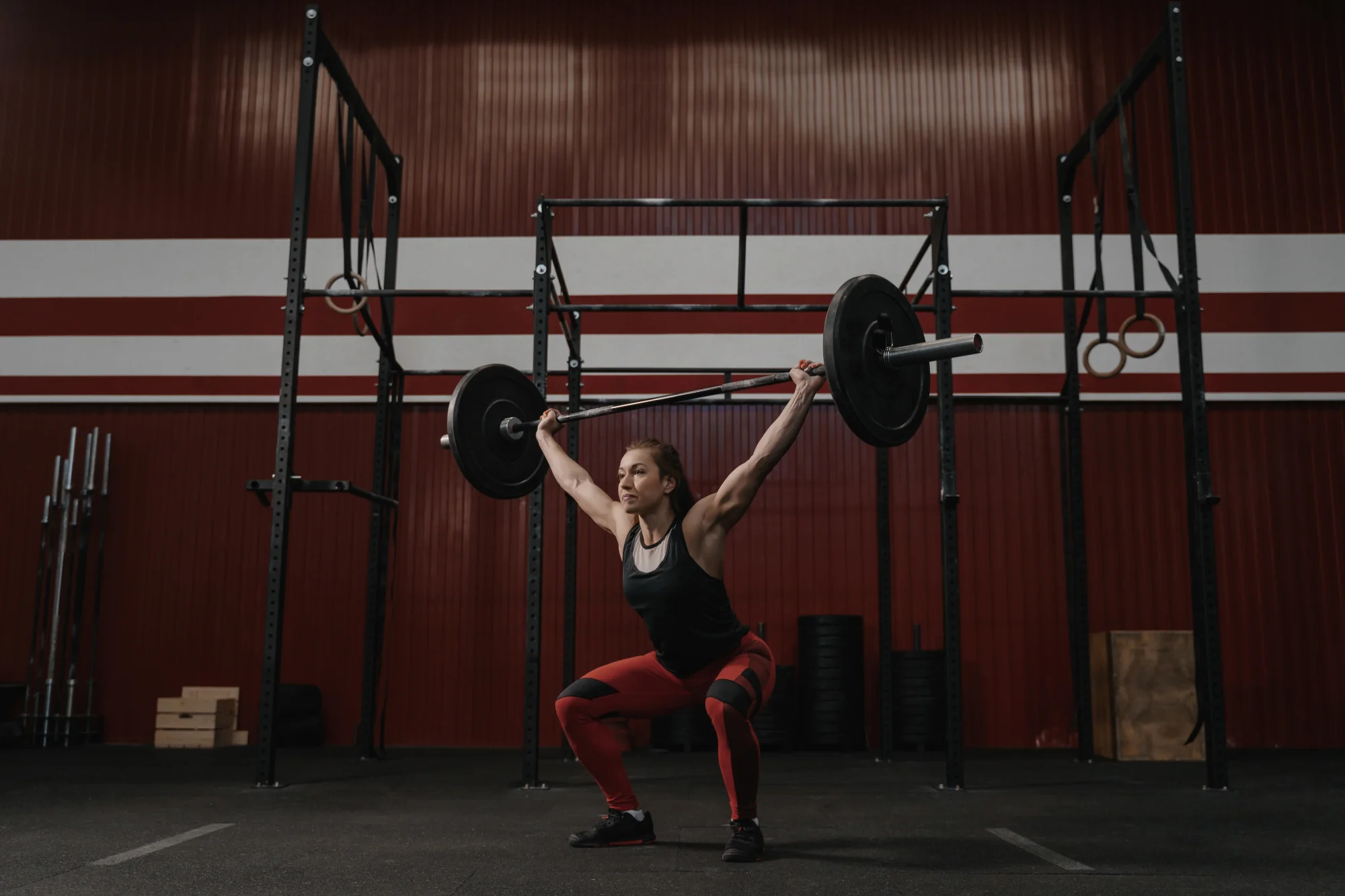
The knee sits between the hip and ankle, so strength and motion at both joints can influence a squat, step, landing, or running stride. That relationship is worth assessing without reducing every case to a simple “mobile hip and ankle, stable knee” rule.
The pain may show up in the knee while hip strength, ankle motion, training load, tissue capacity, or the knee itself all contribute. This framework is most relevant to gradual, nontraumatic anterior knee pain; it is not a diagnosis for every knee complaint.
Hip Strength Is One Possible Contributor
Hip abductor and external-rotator weakness can contribute to altered lower-limb mechanics in some people with anterior knee pain. Here’s the proposed mechanism:
Reduced hip strength or control can accompany inward movement of the thigh during squatting, stepping, landing, or running. That pattern may change patellofemoral loading in some people, but visible knee valgus alone does not diagnose the source of pain.
Over thousands of steps on a ruck march or a long run, that adds up fast.
Hip-focused exercise can help some people, often as part of a program that also trains the knee and manages load. It is not a universal explanation or a reason to ignore quadriceps strength and direct knee capacity.
Long periods of sitting can leave some people feeling stiff or less tolerant of a sudden training load. Hip motion and strength may be useful parts of an assessment, but “tight hip flexors” or “inactive glutes” should not be assumed from occupation alone.
Ankle Mobility Is Another Factor to Assess
Below the knee, limited ankle dorsiflexion creates its own chain of problems.
Dorsiflexion is the ability to bring your toes toward your shin — the movement that happens when you squat, land, walk downhill, or absorb impact while running. When that range of motion is restricted, your body finds the mobility somewhere else.
The compensation can appear at the foot, knee, hip, trunk, or through a change in depth and stride.
Limited dorsiflexion can change squat and landing mechanics, but it does not force one universal pattern or prove why a knee hurts.
Boots, prior ankle injury, calf capacity, anatomy, and training exposure may all affect how much ankle motion a person uses. Measure the limitation rather than inferring it from footwear.
What to Actually Do About It
For gradual anterior knee pain, a useful plan often combines progressive hip and knee exercise, load management, and attention to relevant mobility limits. The right combination depends on the presentation.
Build relevant hip and leg capacity. Depending on the assessment, useful options may include:
- Hip thrusts and glute bridges — direct posterior chain loading, build glute strength in extension
- Lateral band walks — a low-load option for training the hip abductors
- Single-leg work — split squats, step-ups, and single-leg Romanian deadlifts expose side-to-side weaknesses and force each hip to do its own job
- Clamshells — a low-load starting option when heavier hip work is not yet appropriate
Address a measured ankle limitation when it is relevant. Options may include:
- Ankle circles and dorsiflexion drills — use a comfortable range and reassess whether the movement changes
- Supported squat holds — use a wall or rack and work only within a tolerable range
- Calf raises with full range — slow, controlled, dropping all the way into a stretch at the bottom
Modify rather than automatically abandoning lower body training. Complete rest is not always necessary for chronic overuse pain. Reduce or change aggravating loads and rebuild capacity progressively. Pain-monitoring rules should be individualized with a qualified clinician when symptoms are significant or persistent.
Get an appropriate assessment. A physical therapist or sports-medicine clinician can combine history, symptoms, strength, range of motion, and task tolerance. A coach can help modify training but should not claim that a quick movement screen diagnoses pain.
When the Knee Actually Is the Problem
Not every case of knee pain comes from the hip or ankle. There are situations where the knee itself requires direct attention or medical evaluation:
- Sharp, sudden onset pain during a specific movement or incident
- Significant swelling, instability, or locking
- Pain that doesn’t improve after 4–6 weeks of appropriate rehabilitation work
- Prior structural injuries — ligament tears, meniscus damage — that may have left lasting changes
If you’re in that category, see a sports medicine physician or orthopedic specialist. The hip-and-ankle framework applies to chronic, repetitive overuse pain — not acute injuries or structural damage.
Many “my knees are just bad” complaints involve modifiable training-load or movement factors, but the appropriate assessment still matters.
Training Program
Want the training side handled?
Strategic Athlete Foundations programs are built with durability in mind — structured training that develops strength and endurance without grinding you down. It's designed for professionals who need to stay in the fight long-term.
Keep Learning
- Building durability for the long-term tactical athlete
- The foundation of ruck training — 3 exercises that matter
- Post-run recovery work that actually helps
- Should you stretch before or after training?
- How to deal with plantar fasciitis
FAQ
Why do my knees hurt when I squat or go down stairs?
Pain during knee flexion under load can have several causes. Hip strength, ankle motion, quadriceps capacity, training load, and local knee structures may all matter. A single symptom cannot identify the cause without assessment.
Can I keep training with knee pain?
Sometimes, with modifications. Avoid loading that causes sharp or worsening pain, and seek assessment for sudden pain, swelling, locking, instability, neurologic symptoms, or a problem that is not improving.
What exercises help knee pain?
Exercise selection depends on the diagnosis and current capacity. Hip exercises, quadriceps training, split squats, step-downs, and relevant ankle mobility work are common options, but no single list is correct for every knee problem.
Is knee pain normal for military veterans?
Knee discomfort can be common after years of high-impact activity and load carriage, but “wear and tear” is not a complete diagnosis. A targeted plan may help once the relevant tissues, movement demands, and training load are assessed.
When should I see a doctor for knee pain?
Seek medical evaluation if you have sudden onset pain from an injury, significant swelling, a feeling of instability or the knee “giving way,” locking or catching sensations, or pain that hasn’t improved after 4–6 weeks of appropriate rehabilitation. Chronic aching without those red flags may respond to conservative care, but it still deserves an individualized plan.
The next time your knees start talking, resist the urge to accept it as an inevitable consequence of the miles you’ve put in. Look at the hip above, the ankle below, the knee itself, and the recent change in training load.
Your knees are usually just passing along a message.
Source
- Willy, R. W., et al. (2019). Patellofemoral pain clinical practice guidelines. Journal of Orthopaedic & Sports Physical Therapy, 49(9), CPG1–CPG95.